When US Labor Backed US Imperialism
During the Cold War, the CIA and State Department understood that there is power in a union. After the successful purges of leftists from unions, US labor leaders were enlisted by government officials to join in their imperialist operations across the world.
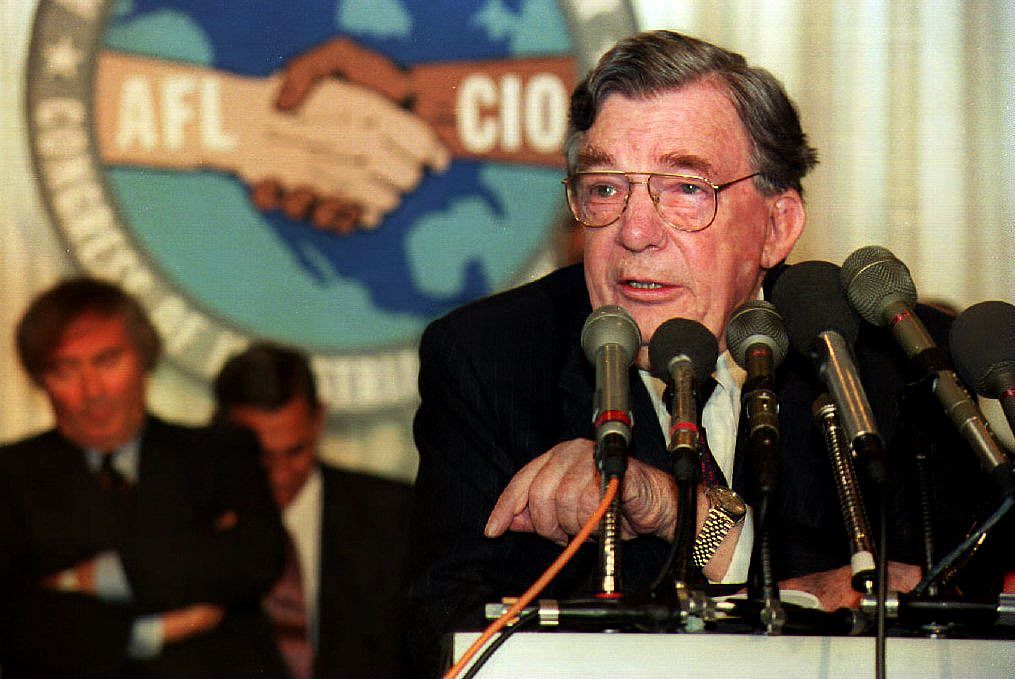
AFL-CIO president Lane Kirkland speaks to reporters on November 18, 1993. (Joshua Roberts / AFP via Getty Images)
The US labor movement was a major force to be reckoned with throughout the twentieth century, playing the key role in establishing the rudiments of a welfare state, eking out a modicum of democracy on shop floors that were previously bosses’ dictatorships, and backing a wide range of other progressive causes like the civil rights movement. There was undoubtedly power in a union. But that power wasn’t always wielded for the working class.
During the Cold War, the United States government sought to establish global dominance. Waging bloody anti-communist campaigns everywhere, the national security state turned to American labor unions for help. Taming the working class throughout Asia, Africa, Europe, and Latin America was key to winning the Cold War, and the CIA and State Department quickly realized they couldn’t win over workers abroad without the help of American unions.
The war abroad was also a war at home during the height of the postwar Second Red Scare. The anti-communist labor forces that advanced American power overseas would not have been able to carry out that mission without first purging left-wing unions and leftist union organizers inside the United States.