Not the Fall of Saigon — Its Liberation
Fifty years since the triumph of national liberation forces, Catalyst editor Vivek Chibber explores the true story of the Vietnam War — not as a tragedy of American overreach but as a triumph of Vietnamese resistance.
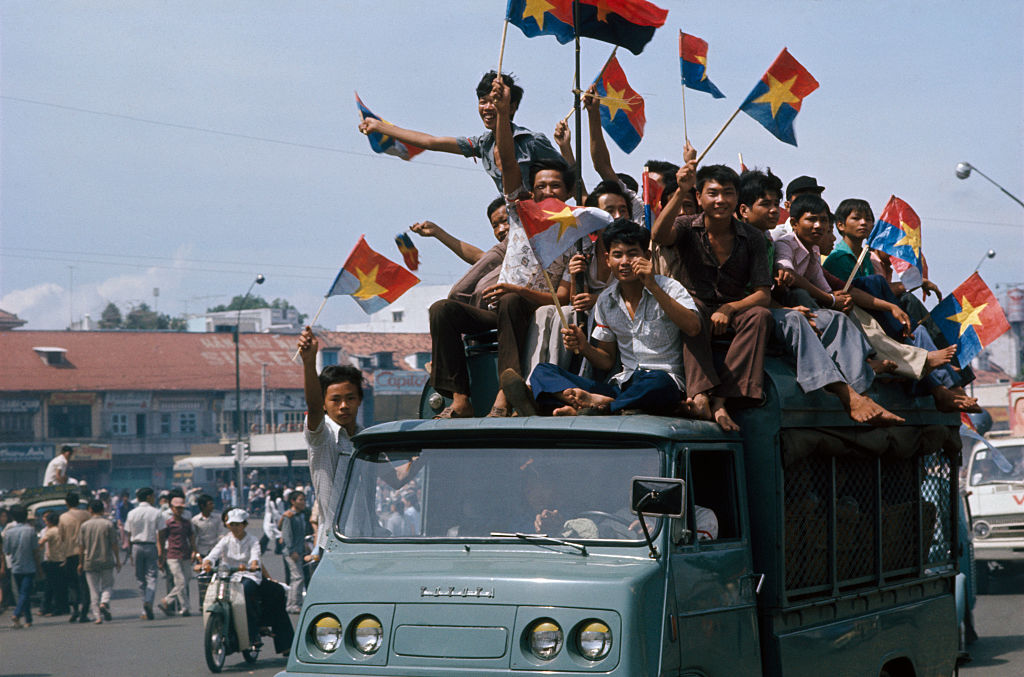
Vietnamese people celebrate after the liberation of Saigon on April 30, 1975. (Jacques Pavlovsky / Sygma via Getty Images)
Fifty years ago today, on April 30, 1975, the world watched as helicopters fled the rooftop of the US embassy in Saigon and the Vietnamese flag was raised over the city — a moment widely described in the United States as “the fall of Saigon” but known across much of the world as its liberation. In this episode of Confronting Capitalism, recorded for the anniversary of that world-historic event, Catalyst editor Vivek Chibber speaks to Melissa Naschek to unpack the true history of the Vietnam War: the imperial motivations behind US intervention, the myth of South Vietnam as a sovereign nation, and how the Vietnamese people — not just the American antiwar movement — ultimately brought the war to an end. As Chibber argues, Vietnam’s victory was not just a military one but a moral and political defeat for empire, with lessons that remain vital for understanding US foreign policy today.
You can listen to this episode of Confronting Capitalism in podcast form here and subscribe to Jacobin Radio to get all future episodes here.
Melissa Naschek
Today we’re going to be talking about the Vietnam War because we’ve got this anniversary.
Vivek Chibber