Tariffs Aren’t Enough to Protect Good Auto Jobs
Automakers have long used the threat of relocating to discipline workers, which has led the UAW to embrace Trump’s tariffs. But tariffs won't solve the problem of competition from nonunion firms or eliminate management’s ability to exploit nonunion labor.
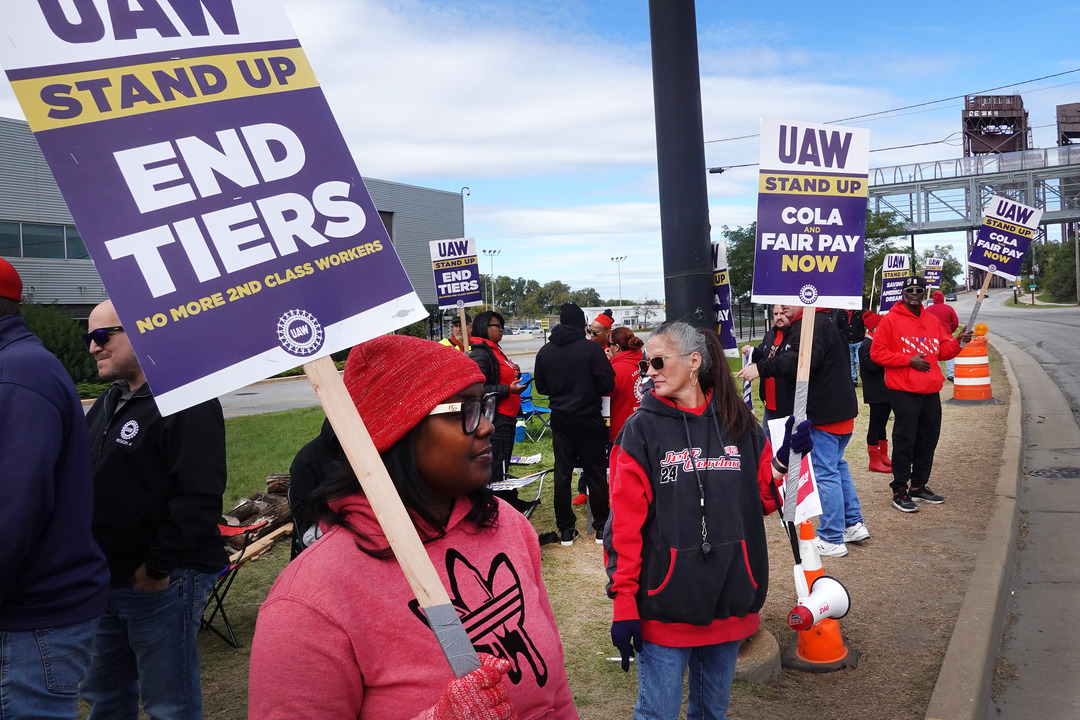
Workers picket outside of the Ford Assembly plant as the UAW strike against the Big Three US automakers continues on October 10, 2023, in Chicago, Illinois. (Scott Olson / Getty Images)
President Donald Trump’s infatuation with tariffs dates back to the 1980s, when he first said tariff was “the most beautiful word in the dictionary.” On March 26, he announced “a 25 percent tariff on all cars not made in the U.S.” but exempted auto parts that comply with the US-Mexico-Canada Agreement, the successor to NAFTA.
For those parts, and for the 25 percent of US-sold vehicles that are assembled in Mexico and Canada, the tariffs will be applied partially at an undisclosed date to only the non-US part of the vehicle’s value. Essentially auto manufacturing is already so integrated across North America that the administration has left carve outs for Mexico and Canada.
The president’s approach to the auto industry offers an opportunity to clarify the goals of US trade policy. To understand what is really in the interests of working people, we have to separate the president’s political whims from the changing contours of global capitalism.