Clocking Out of the Second Shift
The official statistics show that gender gaps in the division of household labor have closed significantly over time. Why are so many women still so frustrated?
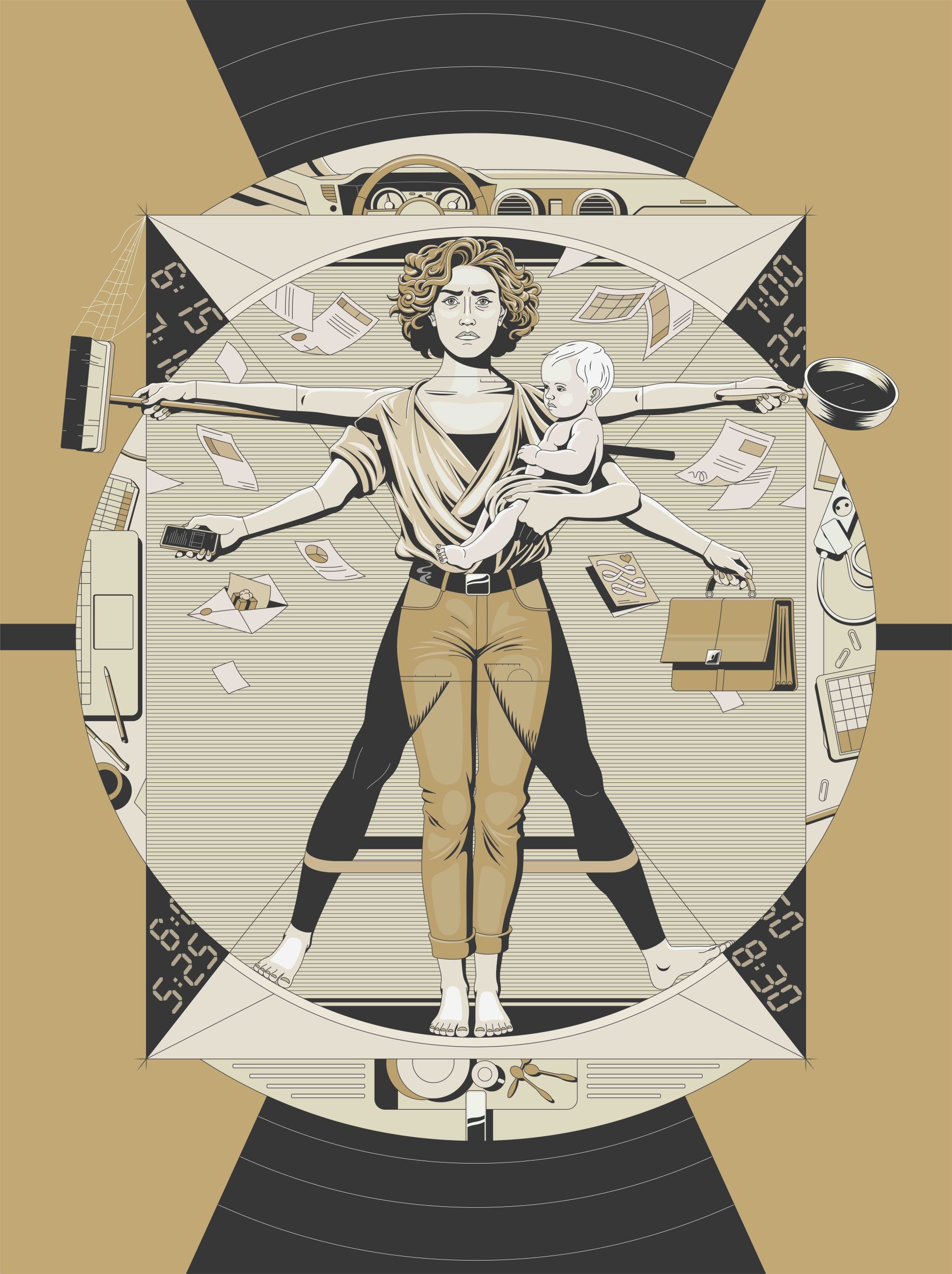
Illustration by Oleg Buyevsky
There now exists a small cottage industry designed to expose a vast, seemingly intractable form of gender inequality embedded, we’re told, in nearly every heterosexual relationship: the unequal division of household labor. Women, according to author and entrepreneur Eve Rodsky, are still “shouldering 2/3 or more of the unpaid domestic work and childcare for their homes and families.” And not only are women continuing to do more cooking, cleaning, and childcare than men, but they face additional pressures in the form of the “mental load,” or the invisible cognitive work that goes into maintaining a household — keeping track of which snacks the kids will eat, scheduling doctor’s appointments, remembering relatives’ birthdays and buying thoughtful presents for them.
Rodsky, however, has a solution. In 2019, she created Fair Play, a tool to help couples divide household responsibilities more fairly. Based on her best-selling book of the same title, Fair Play is a set of cards that lists one hundred common household chores. Each card represents not only a physical task, like preparing weekday dinners, but also the conception and planning of that task — for instance, deciding on a menu and procuring the ingredients for said dinners. Fair Play, which is now backed by Reese Witherspoon’s media company Hello Sunshine, has expanded to include a documentary and even an entire Fair Play Policy Institute, which funds research and advocacy related to caregiving and also certifies official Fair Play Facilitators, who coach couples in learning the Fair Play method to equitably divide their household labor.
The distribution of unpaid work in the home has also been the subject of several buzzy books published over the last few years, including Darcy Lockman’s All the Rage: Mothers, Fathers, and the Myth of Equal Partnership; Gemma Hartley’s Fed Up: Emotional Labor, Women, and the Way Forward; Megan K. Stack’s Women’s Work: A Personal Reckoning with Labor, Motherhood, and Privilege; and Jessica Grose’s Screaming on the Inside: The Unsustainability of American Motherhood. Most recently, journalist Lyz Lenz’s bestseller, This American Ex-Wife: How I Ended My Marriage and Started My Life, advocated divorce as the most liberating and logical solution to the endless unpaid work foisted on women in marriages. “Women are taught that it is noble to lose themselves inside their marriage. To give up everything for home and children, even themselves,” Lenz wrote in her book. “I often wonder how many stories, how many scientific breakthroughs, how many plays, musical scores, and innovations, have been tossed onto the pyre of human marriage.”