Was the Teamsters’ Amazon Strike a Success?
The 2024 holiday season Amazon strike seemed driven more by a desire for media attention than the development of the deep worker base fundamental to forcing the company to accept a union.
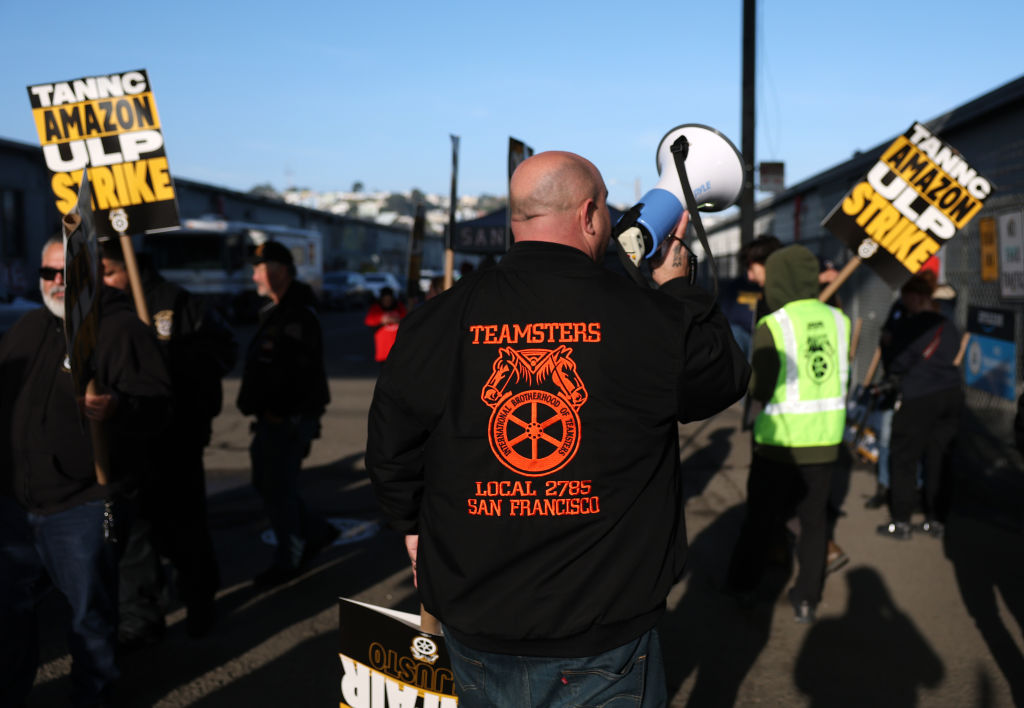
Amazon Teamsters union workers picket outside an Amazon distribution center on December 19, 2024, in San Francisco, California. (Justin Sullivan / Getty Images)
The world has radically changed over the past four-plus decades. Unions haven’t. Or at least they haven’t changed nearly enough to match what they’re up against. In this context, unionizing Amazon — iconic in status and fanatically anti-union — stands as a definitive challenge for this generation of trade unionists. The catch-22 is that while unionizing Amazon holds out the promise of renewing labor, bringing Amazon to heel demands an already-revived labor movement in place.
The only way around this lies in moving to transform labor through the process of unionizing Amazon. With the first strike of Amazon (December 19 to 24, 2024, at seven locations in the United States) now behind us, it seems especially important to have the widest discussions about its outcome and relationship to reviving labor. What went right in the strike? What went wrong? What might we collectively learn and incorporate for “next time”?
Rethinking Strategies
Labor leaders lament the external assaults on unions, but this is rarely extended to confronting unions’ internal deficiencies. When labor actions are successful, unions and their allies are pleased to see praise in print. When success is ambiguous, they tend to get defensive and stay clear of open public discussions. We shouldn’t, they proclaim, “wash labor’s dirty linen in public.” Negatives, they warn, will further “demoralize workers and encourage their enemies.”