Let Workers Lead
The “worker-to-worker” organizing model adopted by many of the most dynamic unions and campaigns in the country has enormous promise for revitalizing labor — in large part because it puts workers themselves in the drivers’ seat.
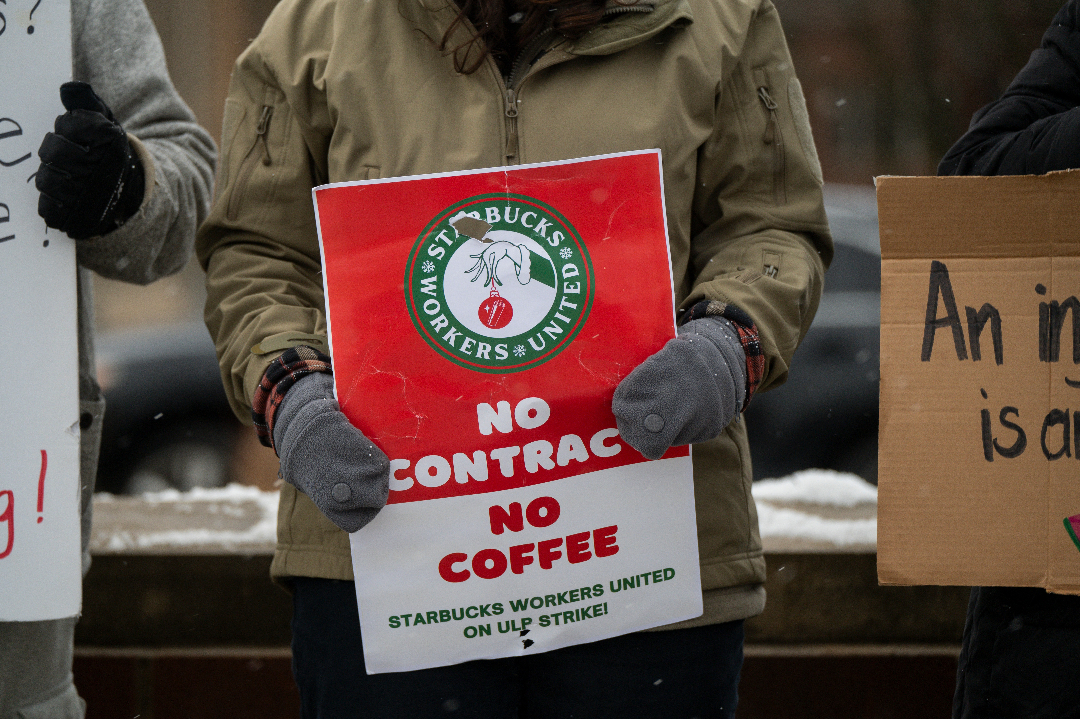
Starbucks Workers United members picket outside a Starbucks store in Chicago, Illinois, on Friday, December 20, 2024. (Vincent Alban / Bloomberg via Getty Images)
Eric Blanc’s argument in We Are the Union is that only “worker-to-worker” organizing can create union drives that are big enough and cheap enough to save the labor movement. It’s already happening, we need more of it; listen up, union leaders, Blanc says: you can afford it.
If Blanc goes a bit overboard on his points occasionally, that’s fine; he’s making a case. The book is a compelling case not only for organizing millions more workers into the labor movement but for doing it in a way that could help them build power in their unions and in their workplaces.
Blanc is clear that neither he nor the worker-organizers he writes about have invented the notion that workers should have control of their own organizing drives. He cites examples beginning with the early twentieth-century Wobblies to show that bottom-up, nonbureaucratized unionism is an ancient thread in our movement.