The Politics of the Woking Class
Musa al-Gharbi’s We Have Never Been Woke pinpoints the hypocrisies of professional elites who use social justice jargon as status markers. Yet the book exaggerates their agency, casting “wokeness” as a core driver of economic inequality.
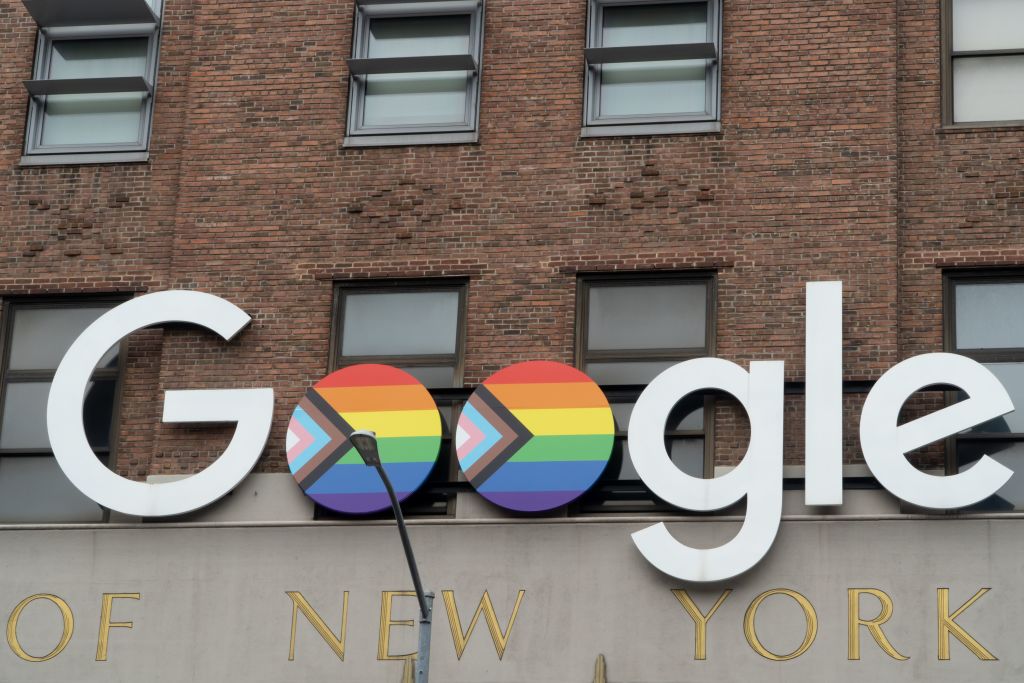
A Google sign decorated for Pride Month on June 30, 2024, in New York City. (John Senter / UCG / Universal Images Group via Getty Images)
Musa al-Gharbi’s We Have Never Been Woke is an ambitious and insightful book that helps shed considerable light on the strange moral and cultural whirlwind of the late 2010s that we now call the “Great Awokening.” Al-Gharbi is to be commended for producing the kind of text that few academics bother to write anymore: a readable book with a sweeping argument. It’s a book chiefly about the role of class, class interests, and class politics in American society. It doesn’t hurt that it is exhaustively well-researched.
Further, it is refreshingly honest. Al-Gharbi’s main subjects, the so-called woke elites in media, the academy, and the NGO world, are his colleagues and class peers. As such, he employs the not-so-royal “we” throughout the text, implicating himself in the politics of the elite. It’s a small gesture, but one that forces the reader (who is probably also part of the said elite) to contend with actual social relations in a way that more abstract language would not.
Finally, it’s entertaining. At one point, the author recounts several high-profile examples — and there are many — of elites who falsely claim to be black, or disabled, or indigenous in order to leverage whatever authority said identity is meant to confer. The effect of all these stories collected together in one place is hilarious.