Trump’s Tariffs Are a Gift to Capital, Not Workers
Donald Trump has championed tariffs as a way to revive American manufacturing. But without a real industrial strategy, Catalyst editor Vivek Chibber argues, they’re little more than a handout to capital.
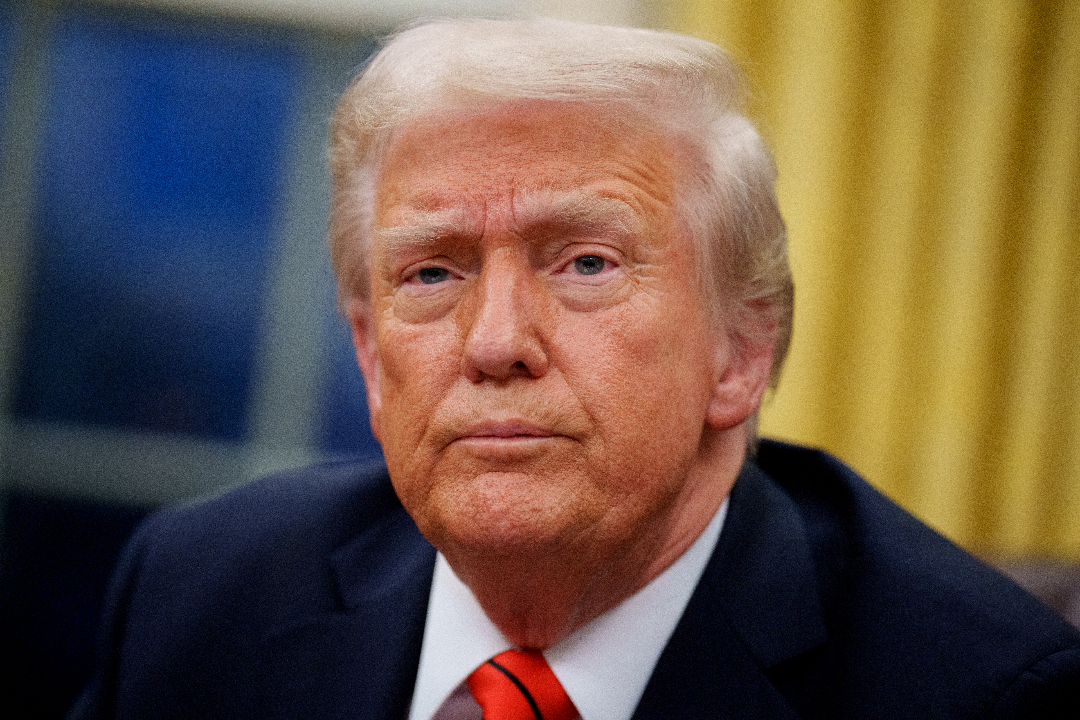
President Donald Trump takes questions after signing a series of executive orders, including one imposing 25 percent tariffs on steel and aluminum, on February 10, 2025, in Washington, DC. (Andrew Harnik / Getty Images)
Within weeks of assuming the presidency, Donald Trump announced tariffs on Mexico, Canada, and China. It’s a centerpiece of a turn toward protectionism that the White House has touted as a way of supporting American workers.
In the latest episode of the Jacobin Radio podcast Confronting Capitalism, Catalyst editor Vivek Chibber and Jacobin contributor Melissa Naschek discuss how nineteenth and twentieth-century protectionist trade policies helped build domestic manufacturing bases around the world, but why Trump’s twenty-first century tariffs are very different. While decades of global free trade have contributed to deindustrialization, workers are not likely to benefit from Trump’s tariffs.
Confronting Capitalism with Vivek Chibber is produced by Catalyst: A Journal of Theory and Strategy and published by Jacobin. Subscribe to Jacobin Radio to listen to all of our podcasts here.