What the Longshore Union Deal Means for Workers
The longshore strike that paralyzed East and Gulf Coast ports for three days last year produced big wage gains and expanded protections in an industry where jobs are constantly under threat of automation.
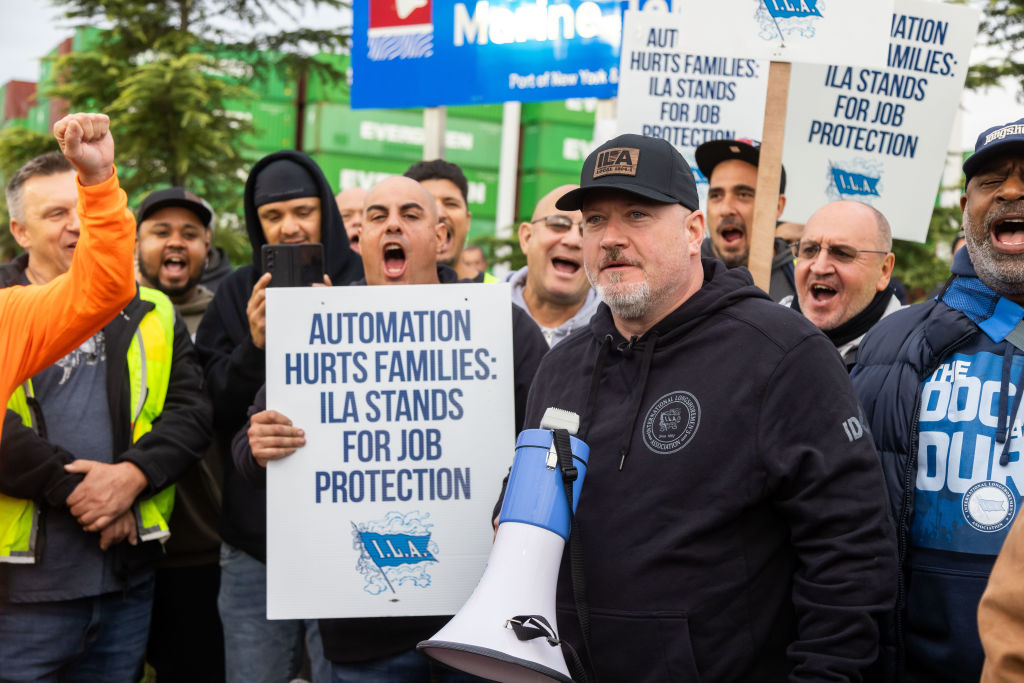
Dennis Daggett, executive vice president of the International Longshoremen's Association, speaks to picketing workers in Newark, New Jersey, on October 1, 2024. (Michael Nagle / Bloomberg via Getty Images)
The International Longshoremen’s Association (ILA) has settled its East and Gulf Coast contract shortly before a January 15 strike deadline. The deal locks in a 62 percent wage increase over six years and expands existing automation protections. Workers will also see larger “container royalty” payouts.
The agreement will go first to a body of ILA delegates, and then members will vote. The full agreement is not yet public.
ILA members won the big wage promise after striking for three days in October, shutting down container shipping on the East and Gulf Coasts in their first coastwide strike since 1977. But the twenty thousand workers went back to work with the major question of automation still on the table.