Why Elites Love Identity Politics
The Democratic Party at every level spent years embracing identity politics that mostly served the interests of professionals, argues Catalyst editor Vivek Chibber. We need a return to class.
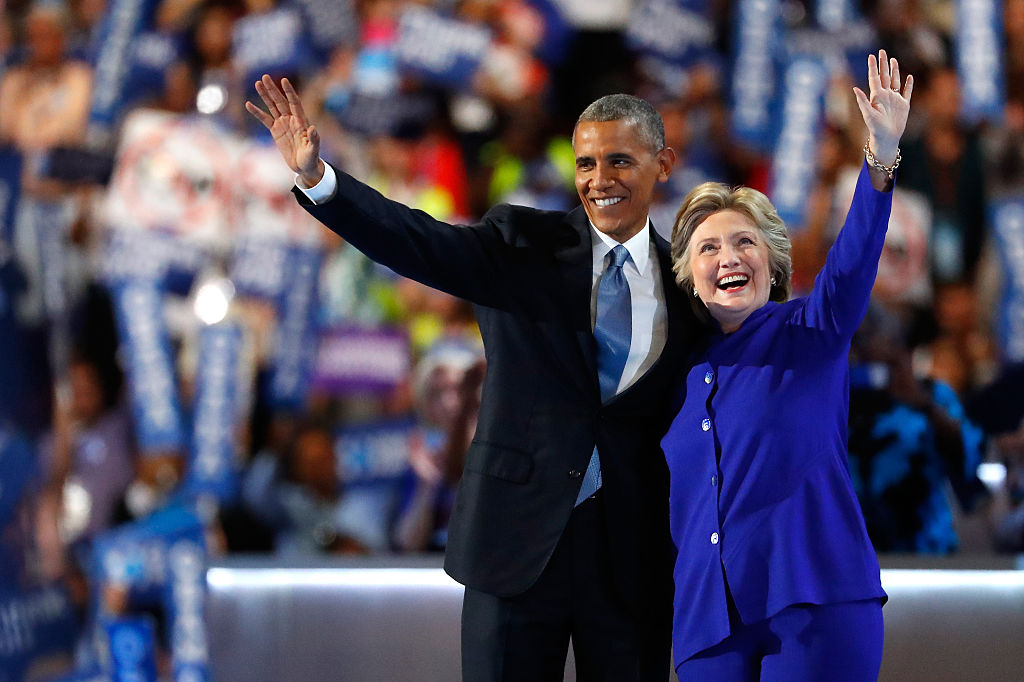
Barack Obama and Hillary Clinton wave to the crowd during the 2016 Democratic Convention. (Aaron P. Bernstein / Getty Images)
“If we broke up the big banks tomorrow, would that end racism? Would that end sexism?” As the memories of Hillary Clinton shimmying and cackling during the 2016 presidential election fade, this quote from one of her campaign rallies has an unusual durability. Just as significant as her loss to Donald Trump, her victory over Bernie Sanders in the Democratic primary reshaped center-left politics for a decade and established identity politics as a standard tool in the Democratic Party belt.
On the latest episode of the new Jacobin Radio podcast Confronting Capitalism, Vivek Chibber, professor of sociology at New York University and editor of Catalyst: A Journal of Theory and Strategy, examines the specter of identity politics that has haunted the Democrats during the last decade. Chibber explains how identity politics promotes strategies and policies that primarily address the interests of elites rather than the vast majority of working Americans.
Identity politics has roots in 1960s fights against racism and sexism. But according to Chibber, the fracturing of the civil rights coalition, deindustrialization, and the collapse of organized labor shifted the agenda away from working-class issues toward a project of professional-class uplift. This transcript has been edited for length and clarity.