The Lost Caucus
The story of the Congressional Black Caucus reflects the class contradictions of black politics in the post–civil rights era.
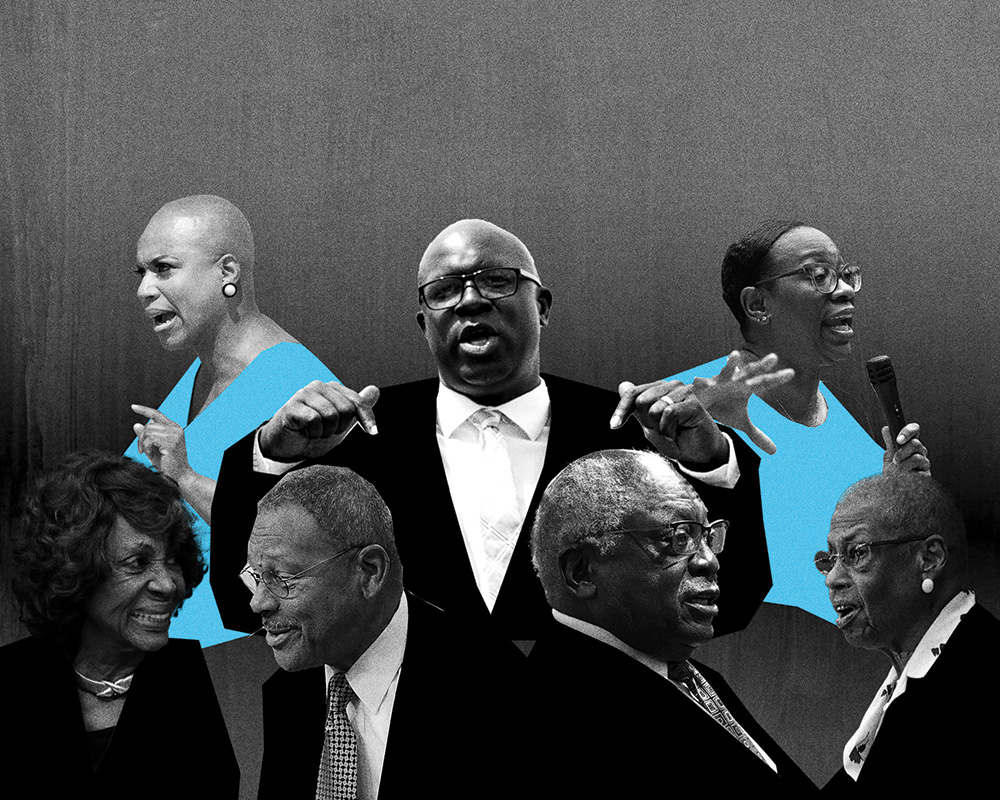
Illustration by Trevor Davis.
It was a bright spot in a depressing decade for the Left. Over the course of a week in November 1984, activists staged sit-ins in front of the South African Embassy demanding the release of imprisoned South African labor leaders. Among those arrested were activists like Martin Luther King Jr’s daughter Yolanda King.
The protests might not have happened without the presence of Congressional Black Caucus (CBC) members, who were instrumental in the planning and participated in the civil disobedience. CBC leaders lent official legitimacy to the actions and used their networks to garner the support of other prominent black leaders and celebrities, such as singer Harry Belafonte and tennis player Arthur Ashe. These sorts of street tactics supplemented a legislative battle with President Ronald Reagan to levy sanctions against South Africa’s apartheid regime.
This scene contrasts sharply with the actions of the Congressional Black Caucus in recent years. While anti-apartheid protesters once showcased the CBC as the militantly progressive arm of Congress, nowadays the caucus seems like a barrier in the way of activists.