How Jimmy Carter Became a Cold War Hawk
In the popular imagination, Jimmy Carter is associated with an idealistic “human rights agenda” for US foreign policy. In reality, by the end of his term in office, he was paving the way for Ronald Reagan’s aggressive anti-communism.
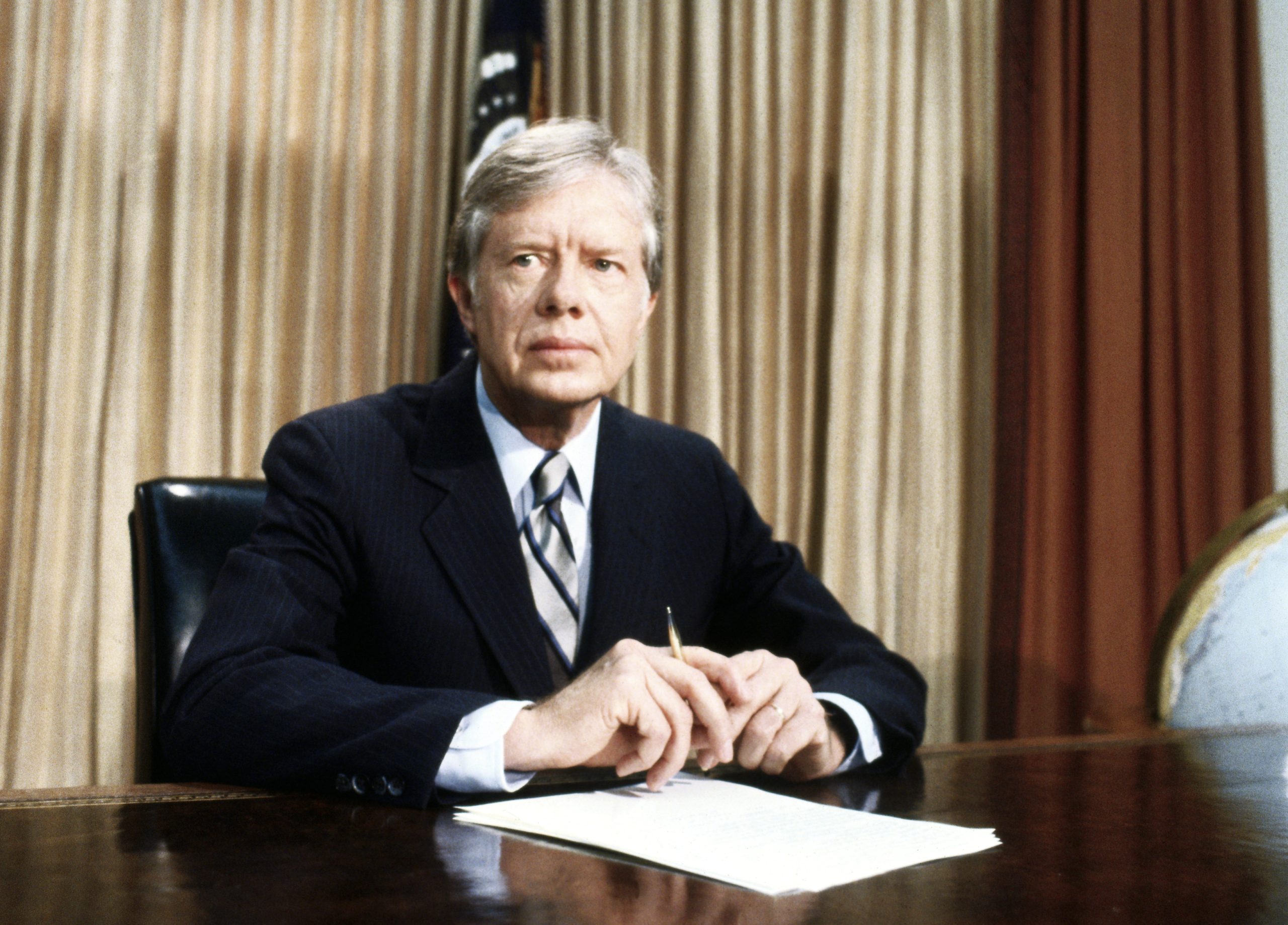
President Jimmy Carter seated in the Oval Office of the White House, 1980. (Bettmann / Getty Images)
When the subject of Jimmy Carter’s record in the international arena comes up, the first thing that comes to mind for many people is his championing of a “human rights agenda” for US foreign policy.
But Carter was also very much a Cold War president. The great theme of the first half of his term in office was his effort to reduce tensions with the Soviets through a policy of détente and negotiation, while the great theme of the second half was the unravelling of that position and Carter’s rapid U-turn toward a much more hawkish and aggressive stance.
In his highly praised book The Second Cold War: Carter, Reagan, and the Politics of Foreign Policy, historian Aaron Donaghy retells the story of that period, arguing that in both the case of Carter’s turn to a hard anti-Soviet line and Ronald Reagan’s partial retreat from that policy after an initial period of intense belligerence, the driving force was always concerns about domestic politics.