Here’s How Economic Populism Can Win
To win competitive districts, left-wing candidates must challenge both economic oligarchy and cultural elitism.
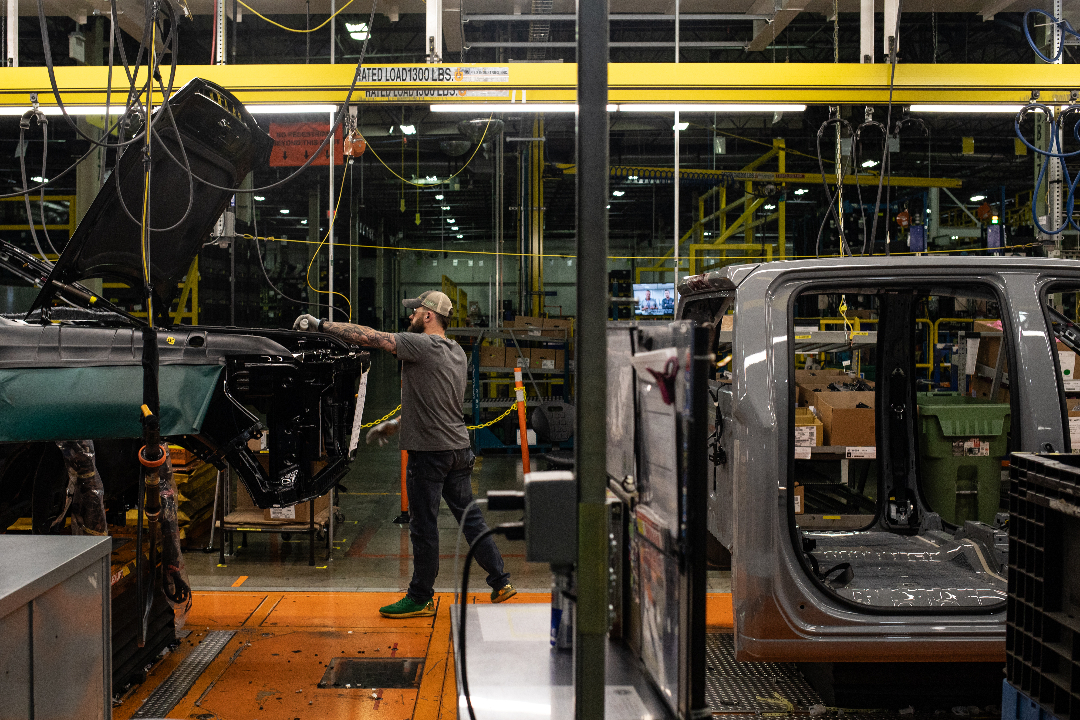
Vehicles on the trim assembly line at the General Motors assembly plant in Fort Wayne, Indiana, on Tuesday, April 9, 2024. (Emily Elconin/Bloomberg via Getty Images)
Economic populism is finally getting its due — at least in election post mortems. Even the most milquetoast of liberals have identified the prime culprit of Kamala Harris’s defeat as her failure to center Americans’ economic anxieties and frustration. Indeed, Donald Trump’s brand of populism delivered him a surprisingly strong showing among working-class voters — particularly working-class Latinos.
As our work with the Center for Working-Class Politics (CWCP) has shown, there is substantial evidence to support the argument that a stronger emphasis on economic populism could have helped the Democrats. We’ve found that candidates who focus on economic populism perform better — in both experimental tests and in real congressional elections — than candidates who do not. In fact, just before the election, our survey testing Harris messaging among Pennsylvania voters found that populist messaging was her most effective approach for winning working-class support.
Yet as a number of figures around the Democratic Party have noted, there are important reasons to question whether populism alone can truly solve the Democrats’ working-class woes.