Can Cuba Survive “Maximum Economic Pressure”?
We speak to Cuba’s deputy minister of foreign affairs about bilateral relations with Washington and what remains of Cuban socialism in a period of scarcity and unrest.
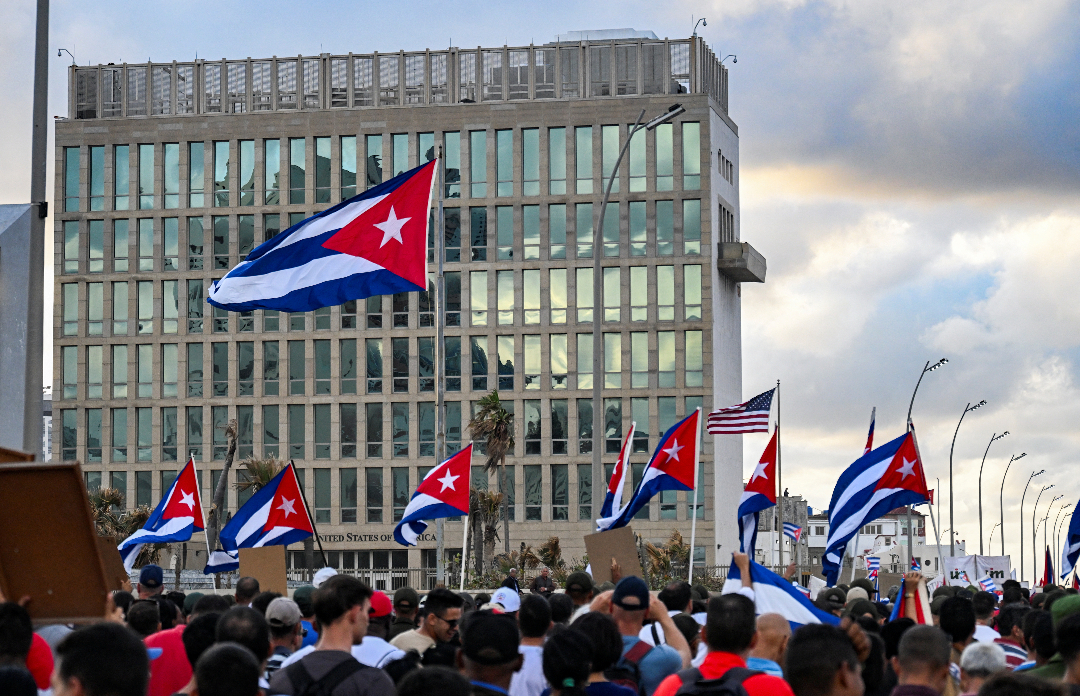
Cubans walk past the US embassy as they march along Havana's promenade on December 20, 2024, during a demonstration against the blockade and Cuba's remaining on the list of countries that sponsor terrorism. (Yamil Lage / AFP via Getty Images)
On April 6, 1960, US diplomat Lester D. Mallory wrote a memo advocating an embargo against Cuba “to bring about hunger, desperation and overthrow of government.” Since most ordinary people on the island, he reckoned, supported Fidel Castro and the country’s recent revolution, only extreme measures could shape popular opinion.
Almost sixty-five years later, despite manifest failure on its own terms, that policy remains in place. Cuban workers continue to suffer as a result.
The last few years have been different than the previous six decades, however. After an opening during the Obama administration, the embargo against Cuba became much more radical under Donald Trump. On the campaign trail in 2020, Joe Biden spoke of Trump’s “failed Cuba policy” and signaled a willingness to return to Barack Obama’s approach. In office, however, he did little to change things.