A Class in Politics
How AMLO turned an anti-corruption campaign into an opportunity for economic redistribution.
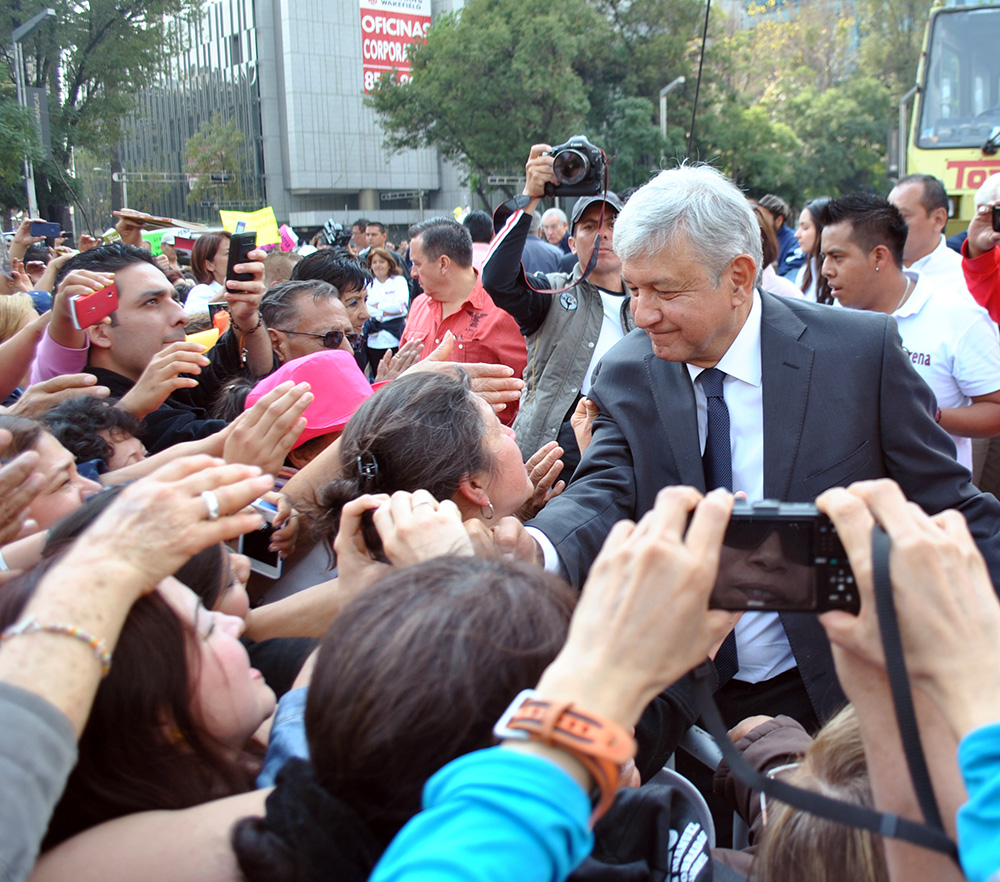
(ProtoplasmaKid / WikiCommons)
The presidential elections that took place in Mexico on June 2 delivered the reigning Morena party and its candidate, Claudia Sheinbaum, a decisive victory. Founded in 2014 by Andrés Manuel López Obrador, or AMLO, Morena won 60 percent of the vote in a three-way race and a two-thirds majority in the legislature. Sheinbaum took office in October with an indisputable mandate. She campaigned on a promise to continue the policies that AMLO implemented during his tenure as president, which witnessed measurable advances for workers.
Official figures show that real wages surged by approximately 30 percent, labor’s share of income increased by 8 percent, and the earnings of the bottom 10 percent grew by 98.8 percent. Additionally, the country’s Gini coefficient, a measure of inequality, improved, and overall poverty dropped by 8.5 percent, with over nine million people lifted out of poverty — the largest reduction in twenty-two years. Unemployment rates are now the lowest in the region, coupled with a slight decrease in informal labor.
Left-Wing Anti-Corruption Politics
Perhaps unsurprisingly, AMLO retained extraordinarily high approval numbers throughout his tenure, averaging in the mid-60s and hitting closer to 80 percent toward the end of his term. Certainly, progressives of different stripes have taken issue with the seventy-one-year-old leader. During his tenure, critics claim, AMLO did not make a full break with neoliberalism, did not heed the demands of feminists or environmentalists, and strengthened the militarization of public affairs — many big infrastructure projects in Mexico continue to be built and managed by the military. These criticisms are not without merit.