The Fight to Unionize US Call Center Workers
In the US, the past 40 years have seen the explosive growth of a new call center workforce, which now employs nearly 4 million people. Despite vigorous organizing efforts, the sector remains largely nonunion.
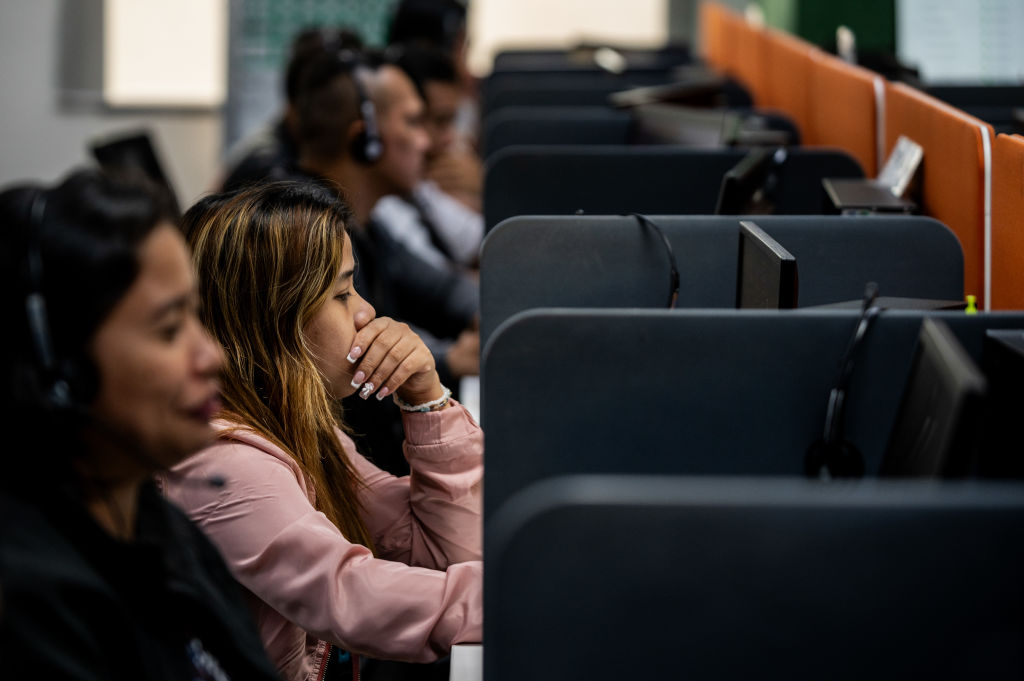
Call center workers in Taguig City, Philippines, on April 24, 2024. (Lisa Marie David / Bloomberg via Getty Images)
American politicians love to pose as defenders of factory workers threatened by globalization, corporate restructuring, and overseas outsourcing. But their campaign spiels rarely mention other jobs at risk, for the same reasons, in white-collar workplaces that now employ more workers than all domestic manufacturers of steel, autos, airplanes, and other machinery combined.
Among them are the nearly four million employees of 40,000 call centers based in the United States, part of a labor force that rapidly expanded in the last forty years due to changes in the way people buy products and get service and support.
As a result, writes Debbie Goldman in her valuable new book Disconnected: Call Center Workers Fight for Good Jobs in the Digital Age, “call centers became the primary vehicle through which businesses (and many public agencies) interact with customers, clients, and citizens.” They now employ seventeen million people in a global industry that offers employers the opportunities to move work from higher labor cost countries to ones with lower-wage scales and “electronic sweatshop” conditions.