Working-Class Men Are Not Okay
Working-class American men are getting lonelier and sicker, and their lives are getting shorter. It’s not just a sad state of affairs; it’s a full-blown crisis that demands policy solutions.
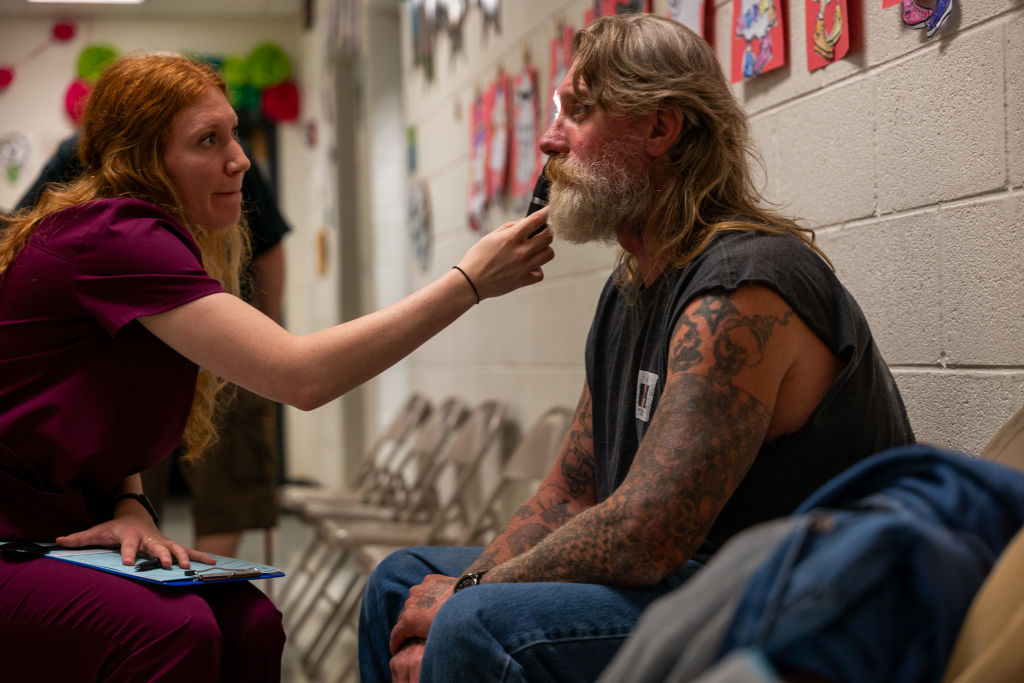
An optometry student administers a vision test to a patient at a mobile dental and medical clinic on October 7, 2023 in Grundy, Virginia. (Spencer Platt / Getty Images)
Sometimes I think about the fifty-year-old man living in my mom’s garage.
Todd is an affable giant, his red beard and long hair giving him the air of a medieval Viking. But his life is far from a fairy tale. Since his divorce years ago, he’s floated between housing situations and minimum-wage jobs. At present, he cooks at a charming but dumpy diner that serves a local central Illinois delicacy known as the “horseshoe.” Because he only nets minimum wage, he has difficulty paying off debt and making ends meet as the cost of living increases. He doesn’t have health insurance, and his nagging physical ailments are worsening.
My brother, his former boss, took him in as an emergency measure to keep him off the streets. A year later, he’s still sleeping on a couch in the garage with little hope of a more independent arrangement.