The Right Without Wrong
For decades, liberals have hoped for the de-Christianization of the American Right. It’s not all it’s cracked up to be.
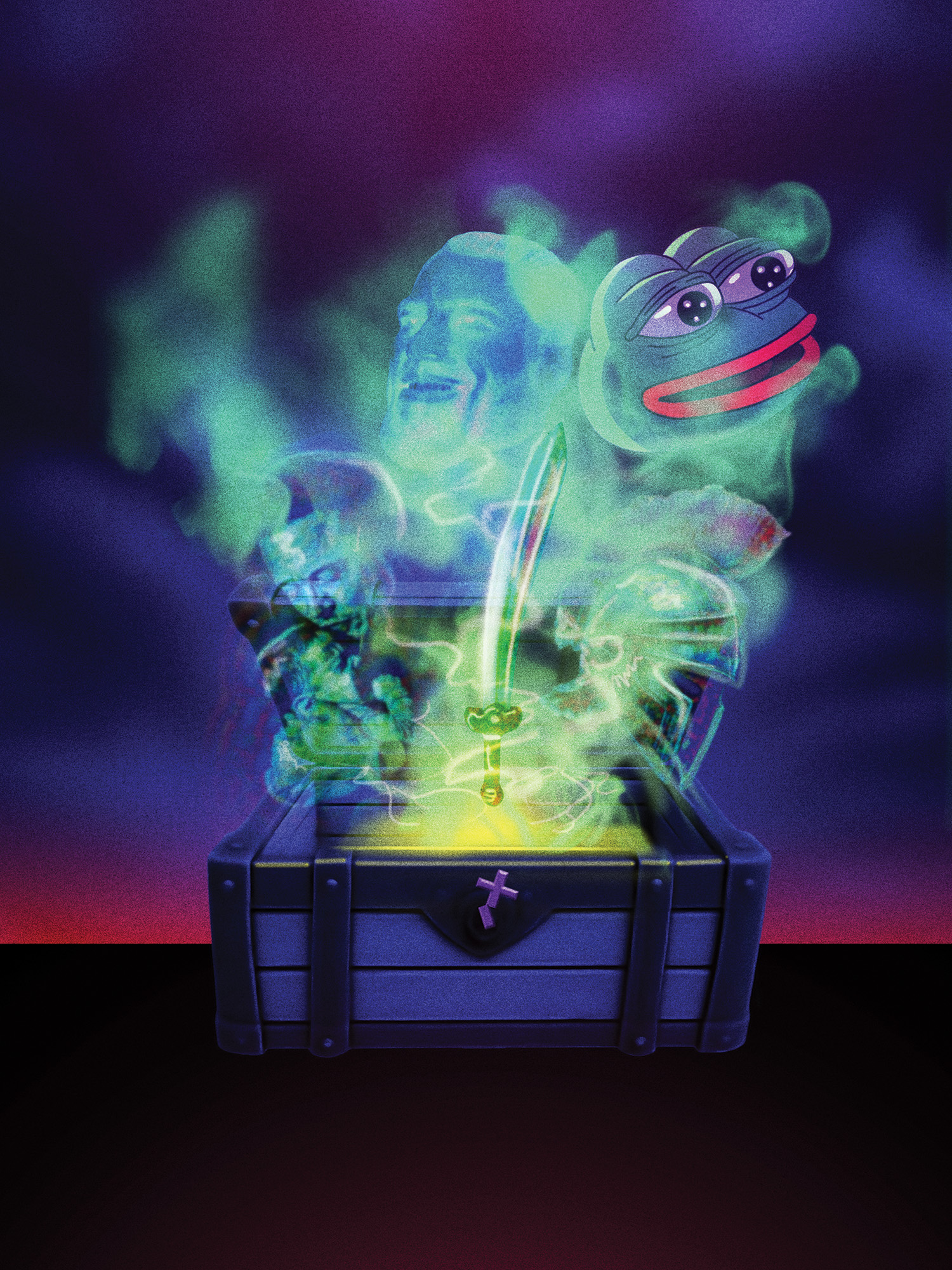
Illustration by Mark Pernice
On paper, Simone Collins, candidate for state representative in Pennsylvania, seems like a typical Republican. She’s a mother of four and, by her own account, an adoring wife. In line with mainstream conservatives, she seeks to “supercharge school choice,” lower taxes, and use AI to “eliminate bureaucratic bloat.” But in one crucial regard, Collins is very different. She’s an atheist.
A Pennsylvania Republican running openly as a nonbeliever would have been unthinkable just a decade ago. Even during the Donald Trump era, when evangelical Christians helped power the 2016 GOP victory and the Catholic justices who would overturn Roe v. Wade were appointed, the Republican Party was the party of faith. Collins, however, seems happy to break with her party on the question of religion, and to do so while running against a Catholic Democrat.
For some progressives, this might seem like a refreshing development. Wasn’t it insufferable going through the George W. Bush years with those mandatory God bless Americas and the annual fretting about “Happy Holidays” vs. “Merry Christmas”? And isn’t the separation of church and state a foundational liberal value, long threatened by conservative Christian crusades? Frankly, shouldn’t it be a bit embarrassing that the United States, unlike enlightened Europe, still has so many citizens who believe in some mythical father in the sky or, worse, in angels with wings?