Palestine Needs Mass Support, Not Sectarian Marginalization
Over a year after Israel launched its genocidal aggression on Gaza, many in the antiwar movement are rightly furious. But we can’t let that rage cloud strategic thinking about the best way to stand in solidarity with Palestine, says Bashir Abu-Manneh.
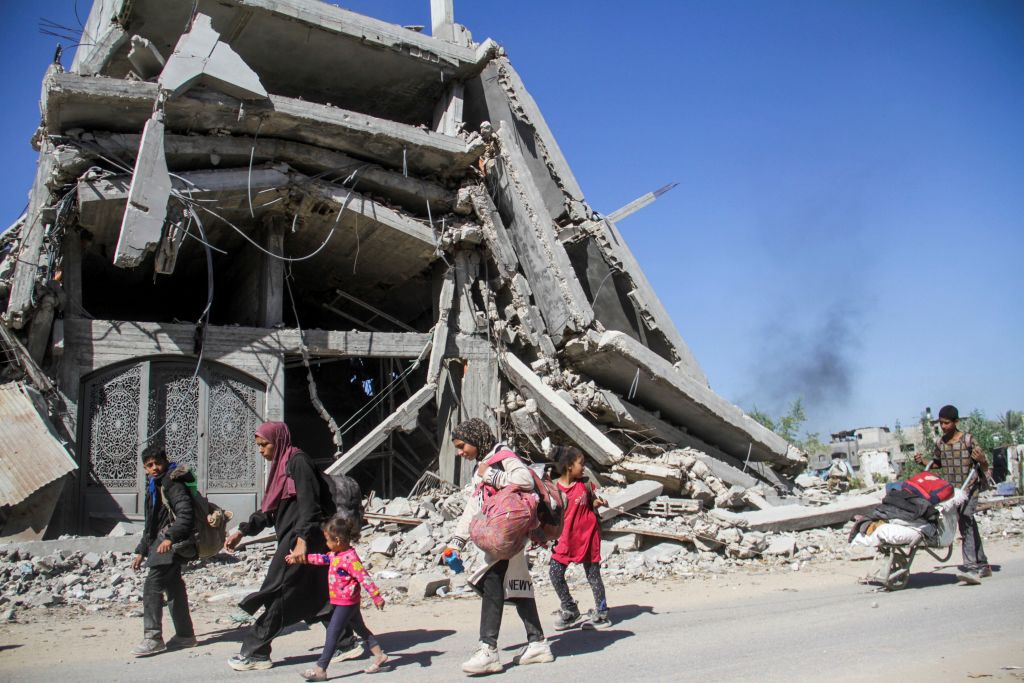
People fleeing from the northern Gaza Strip town of Beit Lahyia are seen on a street in Gaza City, on October 22, 2024. (Mahmoud Zaki / Xinhua via Getty Images)
The moral indignation and anger at Israel’s prolonged apocalyptic war on Gaza is transformative. Israel’s genocidal tyranny has moved the conscience of the whole world, triggered a huge global protest movement in the West against its colonialism and occupation, and radicalized a new generation of young activists. For a global majority, Palestine is now a cause for justice, democracy, and freedom.
Understandably, however, the yearlong war’s continuation and the United States’ unfettered support for Israel has brought deep frustration and anger. As US arms continue to flow to an Israel that remains protected from the wrath of global public opinion, protesters and activists legitimately feel ignored and sidelined by warmongering elites. They are right to be enraged at the continuation of the war, the ceaseless stream of images of death and destruction they see through their phones, and the degradation of their own democracy through the clampdown on support for Palestine.
But it would be a huge mistake to take one’s political cue from a very small minority of vocal activists who have turned legitimate anger and frustration at the drawn-out suffering of the Palestinians into a mindless embrace of violence — not least because this would play into the hands of those who want to see a popular antiwar mass movement discredited.