There Is No Such Thing as Spontaneous Worker Organizing
The 1930s saw the biggest labor upsurge in US history. Just like today, there was economic discontent and a general pro-labor atmosphere. But labor didn’t just passively benefit. Instead, it saw its opportunity to act, building unions for the long haul.
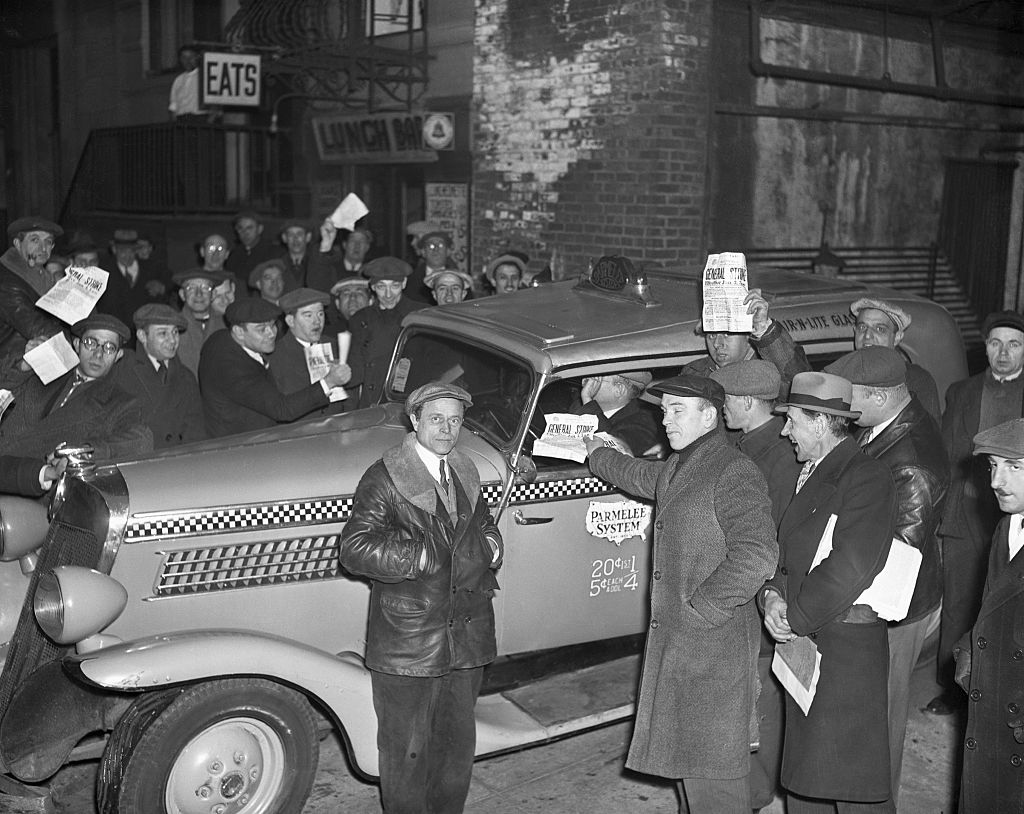
Striking taxicab drivers wave strike notices in New York, on January 3, 1939. (Bettmann / Getty Images)
This engaging interview with labor historian Nelson Lichtenstein sheds light on the rise of the Congress of Industrial Organizations (CIO) in the 1930s and its enduring impact on American labor.
Lichtenstein delves into the CIO’s formation, its breakthrough in organizing industrial workers, and the role of key figures like John L. Lewis and Walter Reuther. He recounts pivotal moments such as the Flint sit-down strike against General Motors and the CIO’s creative strategy of infiltrating company unions in the steel industry. Lichtenstein offers thoughtful perspectives on the CIO’s handling of racial divisions and its ties to the Democratic Party. Throughout the conversation, Lichtenstein underscores the CIO’s historical significance while drawing interesting parallels to today’s labor organizing efforts.
This interview was conducted by Benjamin Y. Fong for the Jacobin podcast Organize the Unorganized: The Rise of the CIO. Nelson Lichtenstein is research professor at UC Santa Barbara and the author of numerous books and articles relevant to Organize the Unorganized, including State of the Union: A Century of American Labor (Princeton, 2003), Walter Reuther: The Most Dangerous Man in Detroit (University of Illinois Press, 1997), and Labor’s War at Home: The CIO in World War II (Temple University Press, 2003).