How San Francisco Longshoremen Made Their Union a Powerhouse
When they started strategically resisting the bosses’ divisive tactics, meeting racism with solidarity, San Francisco longshoremen went “from wharf rats to the lords of the docks.”
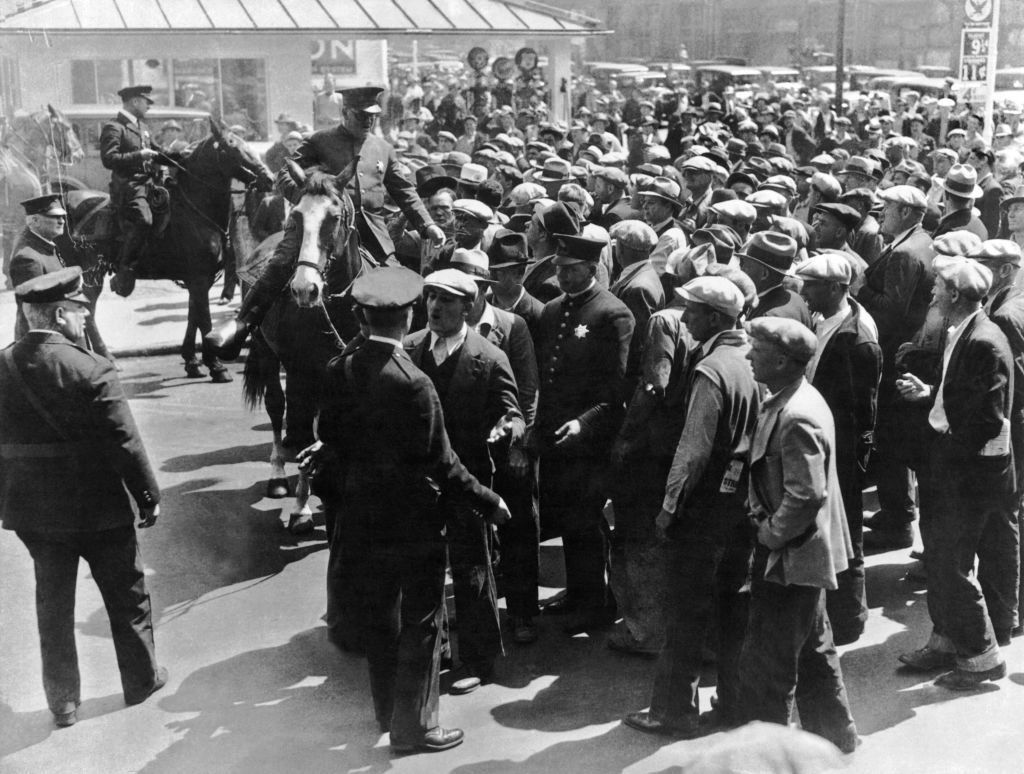
Police confront workers ahead of the West Coast Waterfront Strike, in San Francisco, California, on May 8, 1934. (Underwood Archives / Getty Images)
Peter Cole is a professor of history at Western Illinois University and the author of Dockworker Power: Race & Activism in Durban and the San Francisco Bay Area (University of Illinois Press, 2018). In this interview, Cole and Jacobin’s Benjamin Y. Fong discussed the dedication and success of the longshore workers in the 1930s and ’40s in overcoming racial division on the docks.
Clips from this interview are included in Episode 6 of Organize the Unorganized (among others), which also includes archival interviews with the first International Longshore and Warehouse Union (ILWU) president, Harry Bridges, and the first black president of ILWU Local 10, Cleophas Williams.
Benjamin Y. Fong
What were racial and ethnic tensions on the docks like in the ’20s and ’30s, and how did employers exploit those tensions?
Peter Cole