The Radical History of the United Electrical Workers
The United Electrical Workers emerged in the 1930s as a democratic union with an independent fighting spirit. It represented the promise of the Congress of Industrial Organizations — until it split from the CIO in an atmosphere of anti-communist red-baiting.
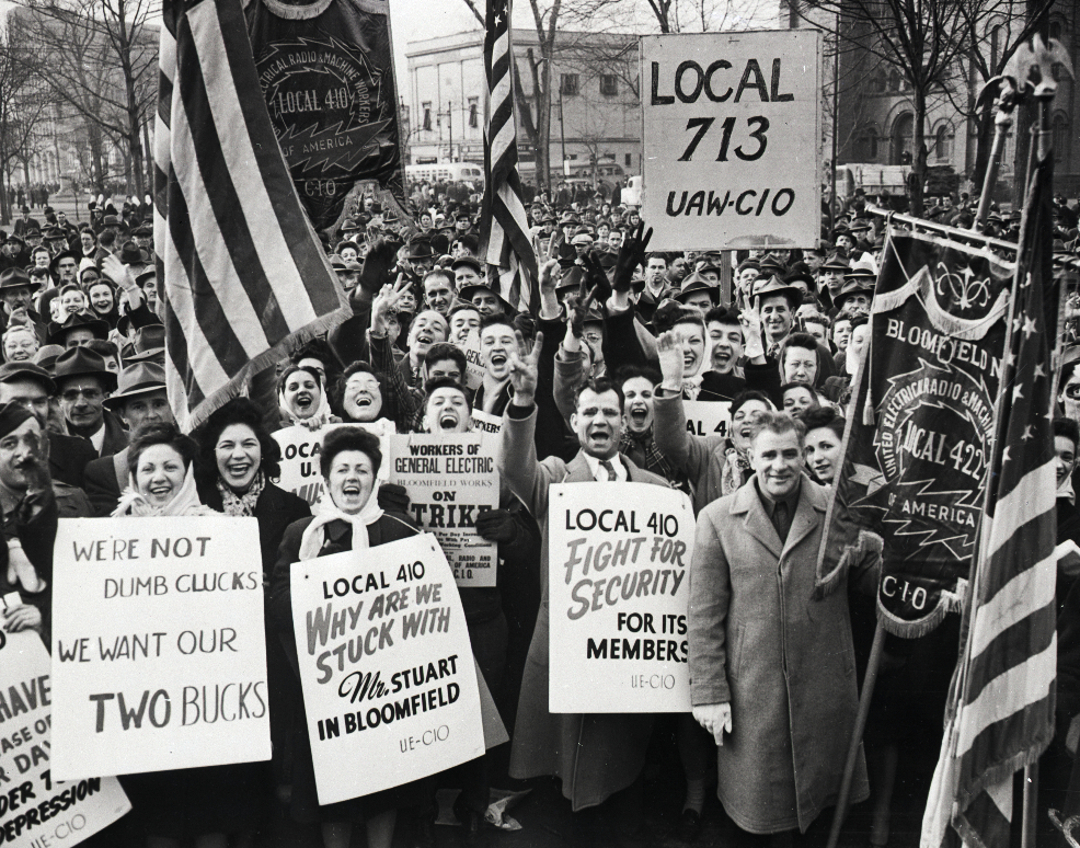
Placards spell out the demands of striking CIO United Electrical Workers as employees of the General Electric and Westinghouse plants in Bloomfield hold a mass meeting on the town green on January 15, 1946. (Bettmann / Getty Images)
James Young is professor emeritus of history at Edinboro University and the author of Union Power: The United Electrical Workers in Erie, Pennsylvania (Monthly Review Press, 2017). This interview focuses on the history of the United Electrical, Radio, and Machine Workers, or UE for short, which was one of the three largest unions in the CIO at its peak, along with the auto and steel workers’ unions.
With its astounding growth in the late 1930s and early ’40s, its radical leadership and democratic structure, and its devastation during the later communist purge, the UE represents well the promise and limitations of the CIO project.
Benjamin Y. Fong
How did the United Electrical, Radio, and Machine Workers come to be?
James Young