What the Decline of Lean Production Means for Workers
In the wake of the pandemic supply-chain shocks that revealed the fragility of lean production, US businesses are emulating Amazon by developing sprawling, adaptable logistics networks. These networks contain key vulnerabilities that workers can target.
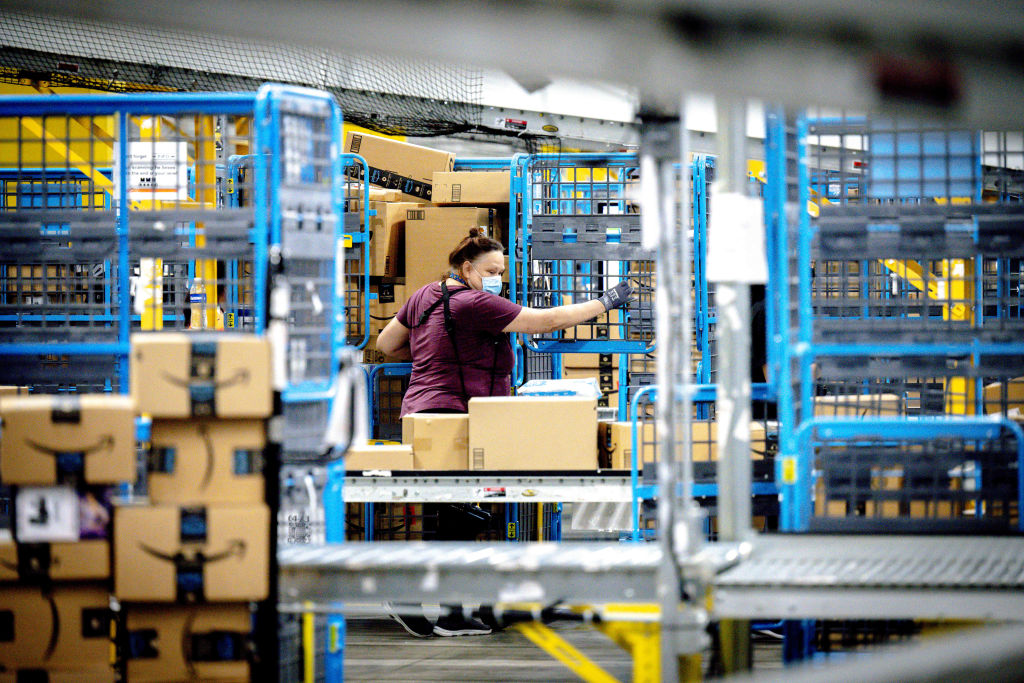
A worker sorts out parcels in the outbound dock at Amazon fulfillment center in Eastvale, California, on August 31, 2021. (Watchara Phomicinda / MediaNews Group / The Press-Enterprise via Getty Images)
For three and a half decades, lean management drove the production and movement of goods. But now logistics and manufacturing employers are shifting to a new model. To maximize our leverage, workers should understand it.
Lean production, introduced in the 1980s from Japanese automakers, caught on in many US industries. It was a whole bundle of techniques to maximize profit, including ratcheting up workloads and pace to the point of breakdown, and inviting workers to brainstorm ways to increase their own exploitation.
A central component was “just-in-time” (JIT) delivery, so companies weren’t spending to make extras or store anything until it was needed. Even within a plant, parts and supplies would arrive exactly when, where, and in the quantities they had to. Manufacturing productivity in the United States increased about 4 percent a year until the Great Recession of 2008–2010.