Inequality Should Not Be the Only Rallying Cry for the Left
For the first century of its existence, the organized left mobilized around the “labor question”: who determines the what and how of production. For years, though, the Left has abandoned this question for a concern with inequality — at its own peril.
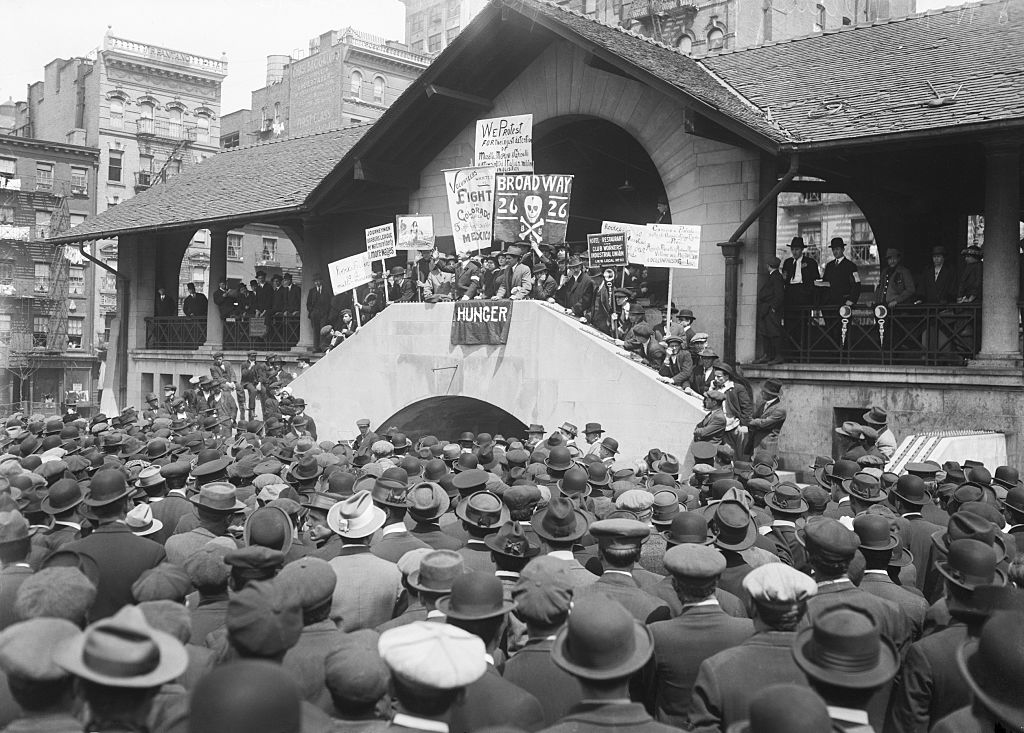
Industrial Workers of the World rally, May 1, 1914. (Bettmann / Getty Images)
“Inequality is the great moral issue of our time,” proclaimed Bernie Sanders, the undisputed champion of left-wing politics in the United States. Over and over again, Sanders has emphasized that the most important political and economic issues confronting the nation are its “extraordinary levels of income and wealth inequality, the rapidly growing concentration of ownership, the long-term decline of the American middle class and the evolution of this country into oligarchy.”
Evidence of economic inequality is embarrassingly abundant and has been accumulating for decades. Between 1989 and 2019, the total real wealth (adjusted for inflation) held by all families in the United States tripled from $38 trillion in 2019 dollars to $115 trillion. Great news — except that, as of 2019, the richest 10 percent of families held 72 percent of this wealth; those in the top 1 percent held more than one-third. Meanwhile, the bottom half of Americans held only 2 percent. Matters grew even more obscene during the COVID-19 pandemic as the misery of millions proved to be the good fortune of a profiteering elite.
Exacerbating this economic maldistribution is the racial hierarchy embedded in American life. The median wealth of white families is substantially higher than that of black or Hispanic families. Inequality, then, is a dual injustice; it is both a matter of economic inequity and a blocked opportunity for those on the wrong side of racial and gender divides.