The Making and Unmaking of the American Dream
The New York Times’ David Leonhardt has written a compelling overview of the improbable rise and spectacular fall of the New Deal order. But he understates the difficulty in reviving a form of American social democracy.
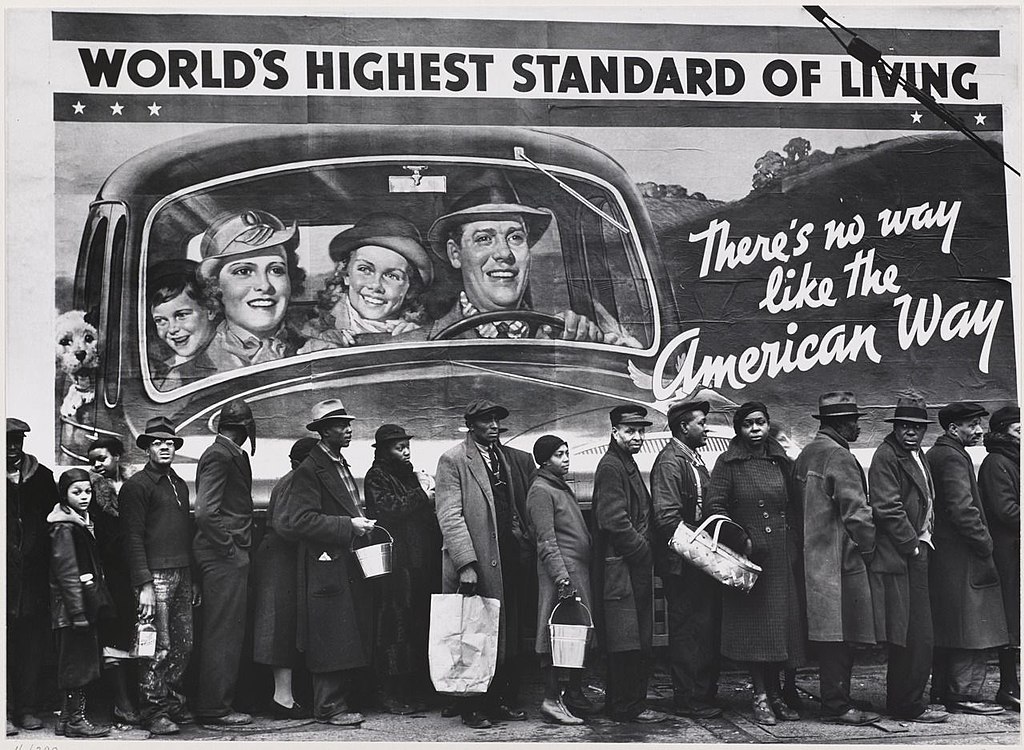
1937 photograph entitled World’s Highest Standard of Living, also known as At the Time of the Louisville Flood, by Margaret Bourke-White. (Wikimedia Commons)
David Leonhardt’s Ours Was the Shining Future: The Story of the American Dream sets out to explain why things seem so much worse in so many ways in the United States today than they were before the 1980s. While 80 percent of baby boomers made more than their parents, only 60 percent and 50 percent of millennials and Gen Zers did, respectively. The last few decades have witnessed the longest period of wage stagnation for middle- and working-class Americans since the Great Depression. Obesity, single-parent families, and incarceration rates have skyrocketed, and it has been twenty years since most Americans felt their country was on the right track. How did we get here?
While most of Leonhardt’s analysis covers well-trod ground that will be familiar to many Jacobin readers, the breadth, clarity, and vividness of the story he tells make the book an essential primer for those looking for a jargon-free but comprehensive overview of the improbable rise and spectacular fall of the New Deal order.
Postwar Abundance
Leonhardt rightly places power front and center in his story. His broad thesis about how social change occurs is simple and intuitive: sustained, grassroots action coupled with sympathetic politicians can reshape the political order to the benefit of working people. By far the most important example of this combination in the twentieth century was the rise of the labor movement — spurred on, Leonhardt correctly notes, by thousands of radical organizers willing to push the envelope even under harsh conditions.