To Make Unions Resonate Again, Study the CIO’s History
Declining union density has diminished American workers’ awareness of labor organizing, pride in union status, and sense of belonging to a tradition of collective struggle. The history of the CIO can teach us how to embed unions in the working class again.
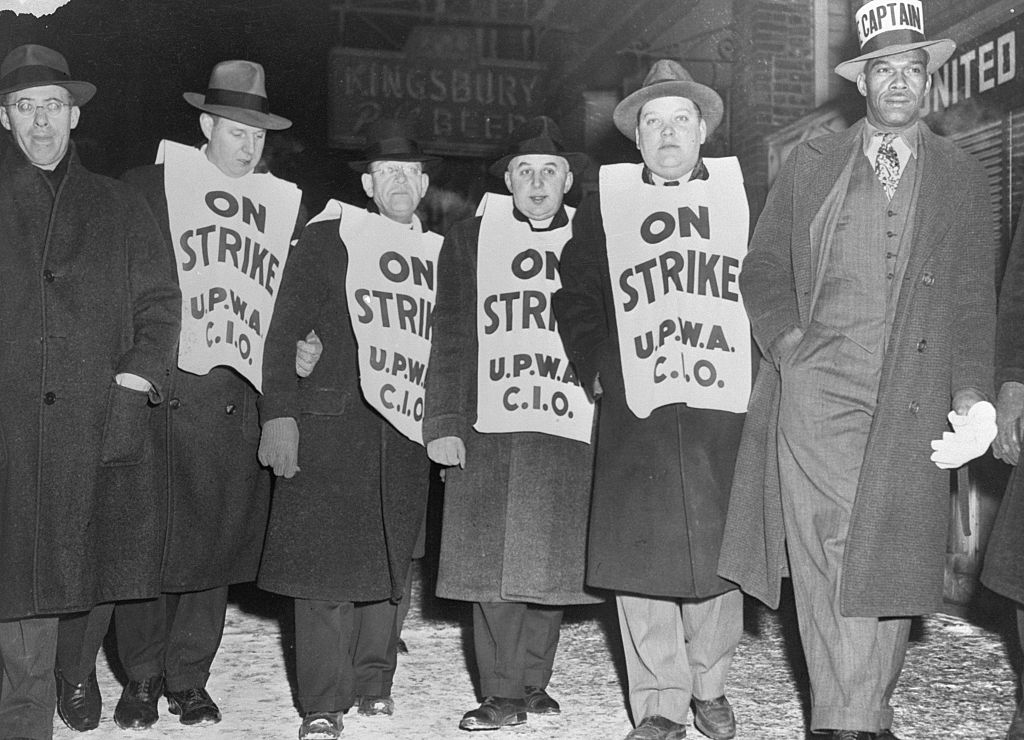
The United Packinghouse Workers on strike with the CIO in Chicago on January 16, 1946. (Bettmann / Getty Images)
Lisa Phillips is an associate professor of history at Indiana State University and the author of A Renegade Union: Interracial Organizing and Labor Radicalism (University of Illinois Press, 2012). The following interview covers a lot of material related to the Congress of Industrial Organizations moment, shedding light on the CIO’s role in organizing unskilled workers and its complex relationship with issues of race, gender, and political ideology. It circles around the case of District 65, a radical, independent union that was the subject of Phillips’s book.
The conversation delves into the CIO’s spotty record on overcoming racial divisions, the unique story of District 65 and its fraught relationship with the CIO, the organization’s approach to organizing women workers, and the influence of communists during this pivotal moment in labor history. Phillips also explores how the CIO paved the way for the civil rights movement and reflects on the lessons from the CIO era that are applicable to the present-day challenges facing the labor movement.
Benjamin Y. Fong
What was the CIO, and what is its primary historical significance?
Lisa Phillips