Power at the Point of Production
From iconic strikes at Goodyear to the battle against GM, episode 3 of Organize the Unorganized: The Rise of the CIO tells the story of transformational victories in rubber, auto, and steel that put the militant CIO on the map.
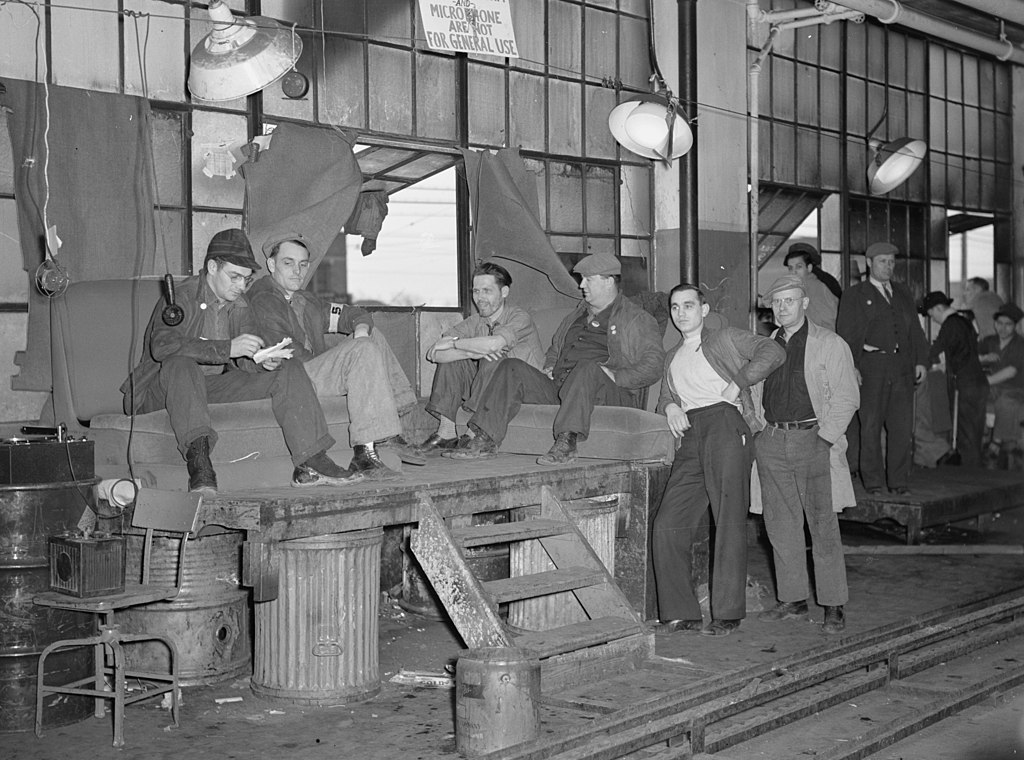
Sit-down strikers in Flint. (Wikimedia Commons)
The reason for the resistance of the leaders of the American Federation of Labor (AFL) to industrial unionism boiled down to a simple point: unskilled workers had no leverage. Skilled tradesmen, if they banded together, posed a real threat to employers and could therefore negotiate over wages and working conditions. The unskilled, however, were easily replaceable, and so many AFL leaders felt that trying to organize them was just a waste of resources.
In the 1930s, thanks to their willingness to take up a wide range of militant tactics, mass-production workers in the United States demonstrated that they did possess leverage: what has been called “power at the point of production.” They did not just withhold their labor. They brought the gears of mass production to a grinding halt through sit-down strikes, mass picketing, blockades, and other such disruptive tactics.