America’s Last Violent Strike Has Been Wrongly Forgotten
The 1937 Little Steel strike is often dismissed as a failure and relegated to a footnote. But it was a courageous organizing effort and a crucial moment in US labor history — revealing the limits of the New Deal order and the deepest dynamics of capitalism.
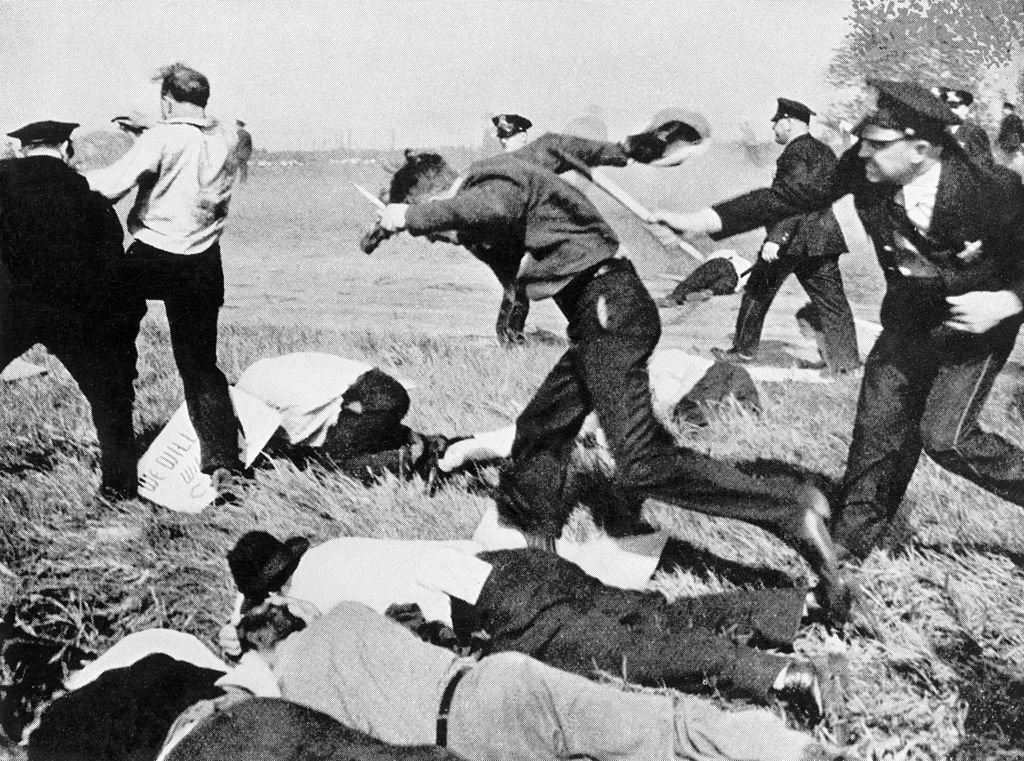
Police attack striking steelworkers in Chicago, Illinois, May 1937. (Archiv Gerstenberg / ullstein bild via Getty Images)
Ahmed White’s The Last Great Strike: Little Steel, the CIO, and the Struggle for Labor Rights in New Deal America (UC Press, 2016) makes the case for the significance of the Little Steel strike in the summer of 1937, where seventy-five thousand workers at four steel companies — Bethlehem, Republic, Youngstown Sheet and Tube Company, and Inland — initially went on strike, followed by more in the weeks and months that followed. Over one thousand strikers were arrested, and sixteen to eighteen were killed. Around eight thousand were illegally fired, and most of them never received just compensation.
Because Little Steel was not particularly successful, it’s often remembered as a footnote in labor history. White argues that Little Steel was in fact highly significant, dramatically illustrating the limits of the New Deal order and foreshadowing what postwar liberalism would and wouldn’t accommodate. As the last really violent strike in American history, and one that was lost despite heroic displays of militancy and courage on the part of the steel workers and the Steel Workers Organizing Committee, Little Steel shows what it means to live in a society where capitalists wield an extraordinary amount of power.
Benjamin Y. Fong
What was the Congress of Industrial Organizations (CIO), and what is its primary historical significance?
Ahmed White