How Medical Debt Destroys the Lives of Millions of Americans
In the US, patients recovering from life-threatening illnesses often find that their first concern is not their health but the massive medical debts they’ve incurred. Right-wing politicians, insurers, and hospitals have worked to maintain this status quo.
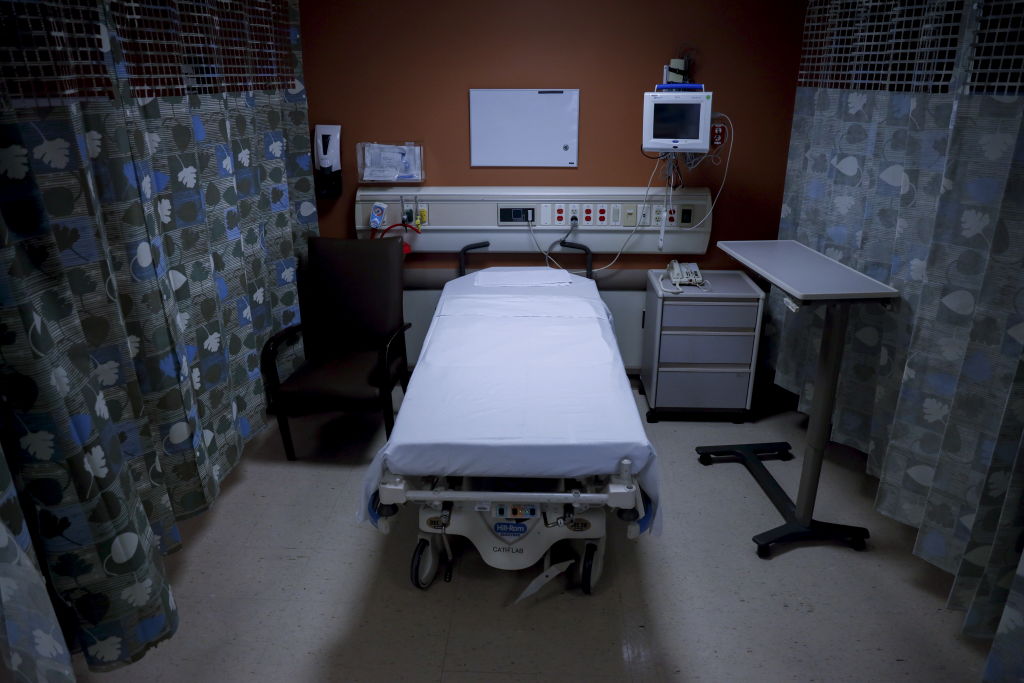
An empty hospital bed in the cardiac catheterization ward at Mount Sinai South Nassau hospital in Oceanside, New York, on May 18, 2020. (Jeffrey Basinger / Newsday RM via Getty Images)
The United States lags behind almost every wealthy country in not having a health care system that is either free at the point of use or affordable. Instead, millions of people are saddled with medical debt that they will never be able to afford to pay back. Even on its own terms, this system is irrational. The revenue raised for private hospitals and debt collectors by issuing patients with bills is a relatively insignificant proportion of income. However, the costs of these debts to patients, who are often summoned to court because of delinquent payments, are life wrecking.
Luke Messac, a doctor and historian of medical treatment, spoke to Astra Taylor for Jacobin Radio’s The Dig podcast about the causes of the United States’ medical debt crisis. At the heart of it is, he argues, not just ruthless profiteering of the private insurance and medical establishment, but the refusal of charity and public hospitals to live up to their legally mandated commitments to patients.
However, the fact that doctors, historically hostile to efforts to create single-payer health care, have joined picket lines in recent years is a welcome sign. The struggle for free health care in the United States must, as Messac argues, rely on a recognition of the hospital as a site for labor organizing and mobilization.