Ron Carey’s Lessons in Labor Movement Reform
The late and legendary Teamsters reform leader Ron Carey briefly succeeded in a monumental task: turning around a corrupt and conservative union. Today’s aspiring reformers looking to revitalize their own unions can learn from his career.
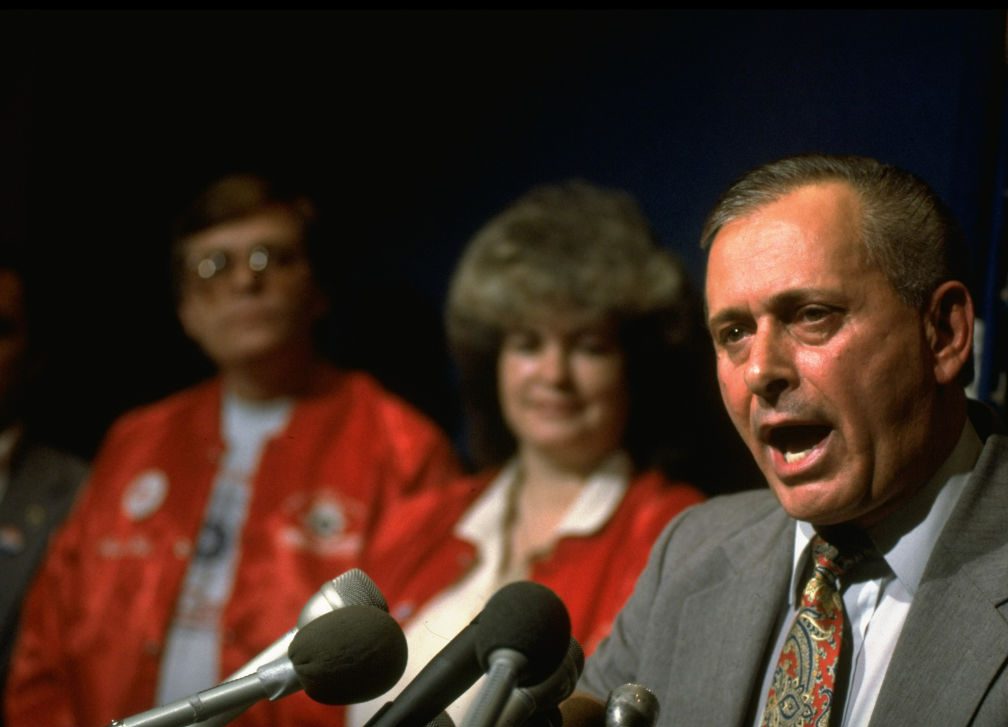
Teamsters president Ron Carey holds a postelection press conference. (Cynthia Johnson / Getty Images)
Books about union presidents are usually penned by professional writers — either academic historians, labor journalists, or paid flacks. Past accounts of the life and work of labor organization chiefs like John L. Lewis, Walter Reuther, Jimmy Hoffa, or Cesar Chavez have run the gamut from hagiographic to constructively critical. Few have had a biographer whose view of their leadership role is rooted in firsthand experience as a blue-collar worker in the same industry and union.
Ken Reiman’s personal connection to the subject matter of Ron Carey and the Teamsters resulted from his long career as a UPS driver and activist in the local union that Carey led before becoming president of the International Brotherhood of Teamsters (IBT) in the 1990s. Reiman’s insights into the workplace culture and organizational politics of IBT Local 804 in Queens, New York, before, during, and after Carey’s presidency provide a rank-and-file perspective on the challenges of institutional change in organized labor over the past fifty years.
Carey’s story, as told by Reiman, contains many important lessons for younger union activists, whether they are Teamsters or involved in other unions. Organized labor today is in a state of very positive ferment. A reform movement in the United Auto Workers (UAW), modeled after Teamsters for a Democratic Union (TDU), has had similar success winning direct election of top officers and using that system to oust old-guard officials.