The End of the Future
Both the Left and the Right used to articulate radically different visions of the future. Today the entire political spectrum looks backward, aiming to restore the past.
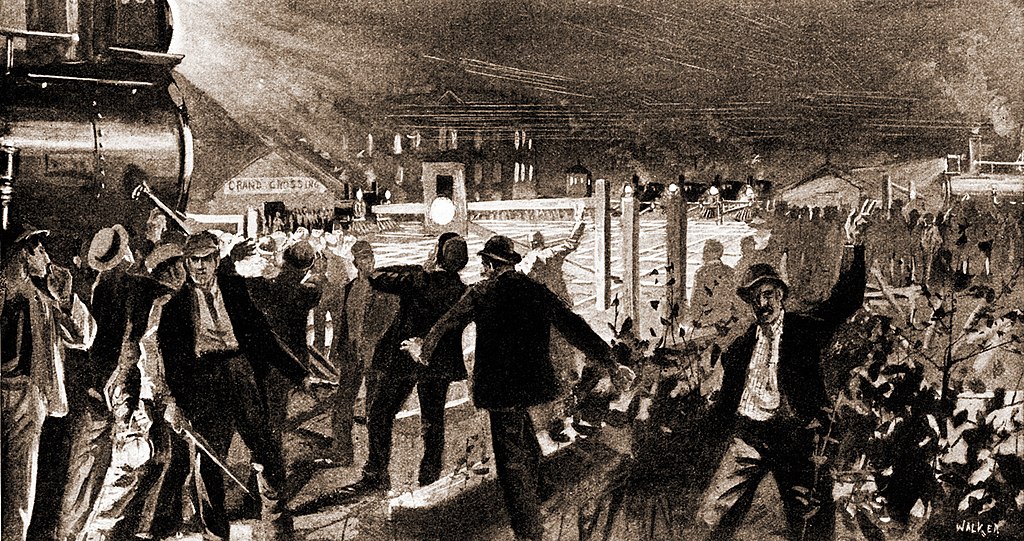
American railworkers on strike, June 1894. (Wikimedia Commons)
Judy Wraight, a thirty-year veteran autoworker who worked at Ford’s River Rouge plant as a member of Local 600 of the United Auto Workers (UAW), was walking the picket lines in the fall of 2023. In a PBS Newshour report on September 21, she explained why. “Everything the UAW is asking for is literally what we had before.”
She was right. Most of what the union fought for and won had been lost in one way or another over the previous forty years. Wages to begin with, as well as retirement benefits and the right to strike at local plants, had been serially sacrificed to keep the Big Three auto companies in business and eventually flush with profits. And this is not to mention the precipitous decline in the standard of living of young, new workers, compelled by contract to enter the industry at a lower “tier” carrying severely reduced wages and benefits and with little chance of moving up.
Victory was sweet, hailed by everyone, even the president of the United States. Credit belonged, first of all, to the strategic brilliance of the union’s leadership, which conducted a rolling series of “Stand-Up” strikes simultaneously at all three car makers (an audacious move never before attempted by the union). It effectively pitted the automakers against each other. But this in turn depended on the collective resilience and solidarity of the workers themselves — people like Judy Wraight.