Don’t Write Off US Union Organizing Before the CIO
The Congress of Industrial Organizations is often understood to the be the innovative, solidarity-based alternative to the American Federation Labor, its immediate predecessor. But the CIO had limits too — and the AFL had more to offer than it gets credit for.
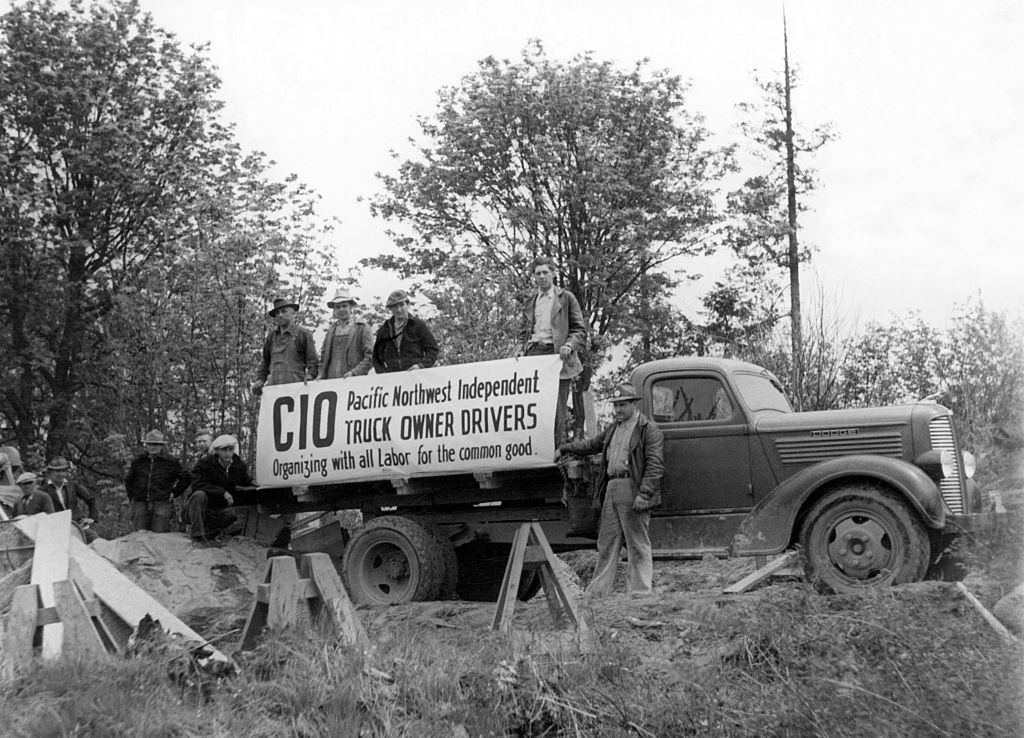
Truck owner drivers organizing with the Congress for Industrial Organization in Seattle, Washington, ca. 1935. (Underwood Archives / Getty Images)
Labor studies scholar Dorothy Sue Cobble challenges many of the typical ways in which the history of the Congress of Industrial Organizations is typically understood. She specifically pushes back on the idea that the organization from which it emerged, the American Federation of Labor, was a solely regressive and blinkered organization — a too-tidy story that diminishes our understanding of the origins and dynamics of the CIO. In the following interview, Cobble offers a capacious and balanced understanding of what made the CIO work, and what its limitations were.
Dorothy Sue Cobble is a distinguished professor emerita of history and labor studies at Rutgers University and the author of multiple books, including Dishing It Out: Waitresses and Their Unions in the Twentieth Century.
Benjamin Y. Fong
What was the CIO, and what is its primary historical significance?
Dorothy Sue Cobble