How Union Reformers Took Over the Vermont AFL-CIO
In 2019, local union members of the Vermont AFL-CIO elected officers to top positions in an attempt to make the federation more progressive, democratic, and effective. Their record is impressive.
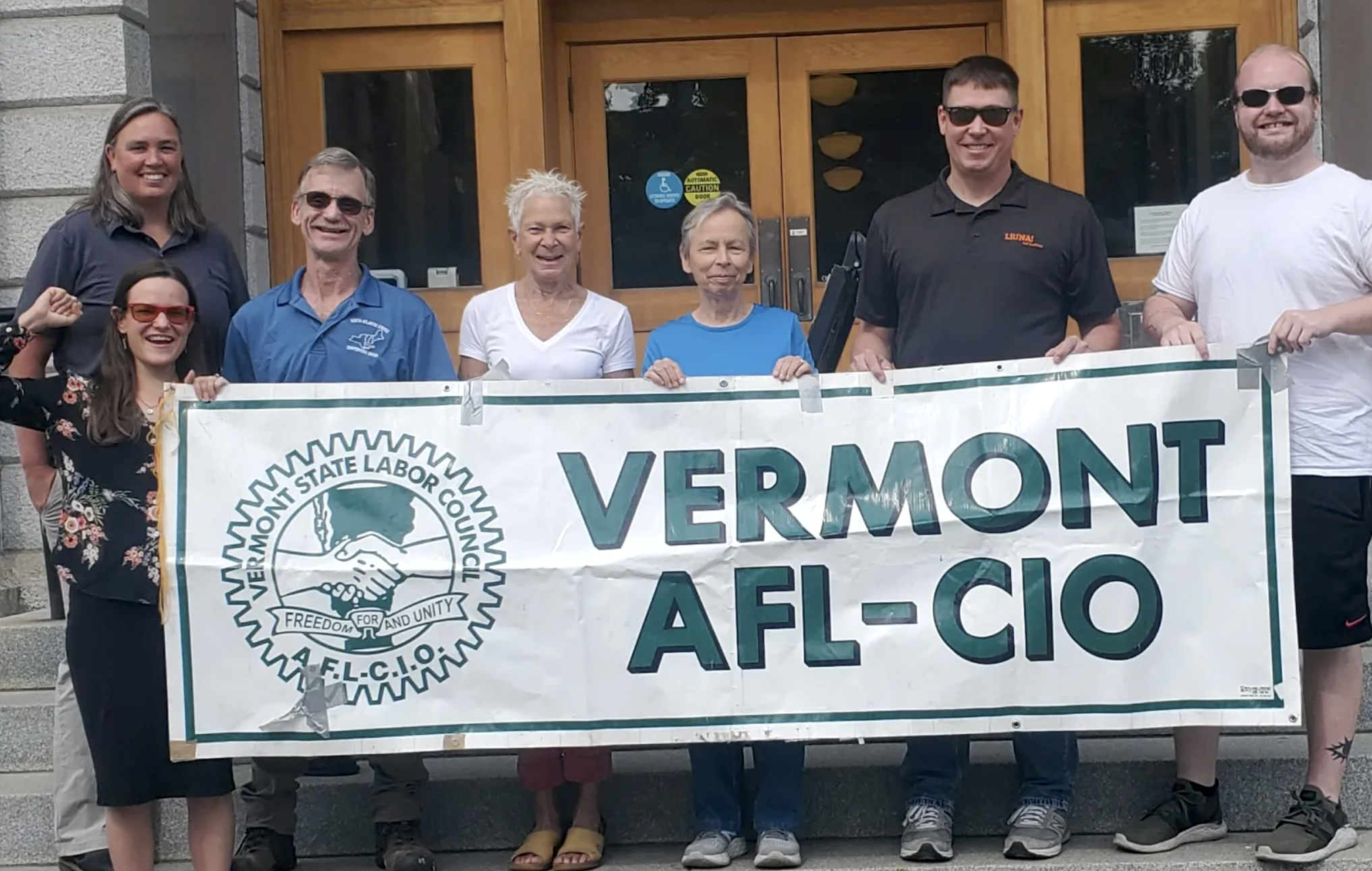
Members of the Vermont State Labor Council. (Courtesy the Vermont State Labor Council website)
Changing the leadership, structure, or functioning of any US labor organization is no easy task. Activists and experts have long argued about whether dysfunctional unions are best reformed from the top down, from the bottom up, or some mix of the two approaches.
For the past sixty-five years, the main locus of union democracy and reform struggles in the United States has been local unions, which hold leadership elections every three years and are closest to the membership. Thousands of rank-and-file workers have campaigned for more militant unionism by running for and winning local office.
Some have had the backing of national networks of like-minded dissidents, including Teamsters for a Democratic Union (TDU) and Unite All Workers for Democracy (UAWD), a TDU-inspired reform caucus within the United Auto Workers (UAW). And in recent years, TDU and UAWD supporters even ousted national headquarters officials from their respective unions, resulting in a major contract win for UPS Teamsters and a historic autoworker strike of the Big Three last year.