Populism Belongs to the Left
In an interview, writer Thomas Frank discusses how populism brought together workers, farmers, and all those struggling against the wealthy for a more egalitarian society — and why that’s made it a dirty word for the elite, both in the 1890s and today.
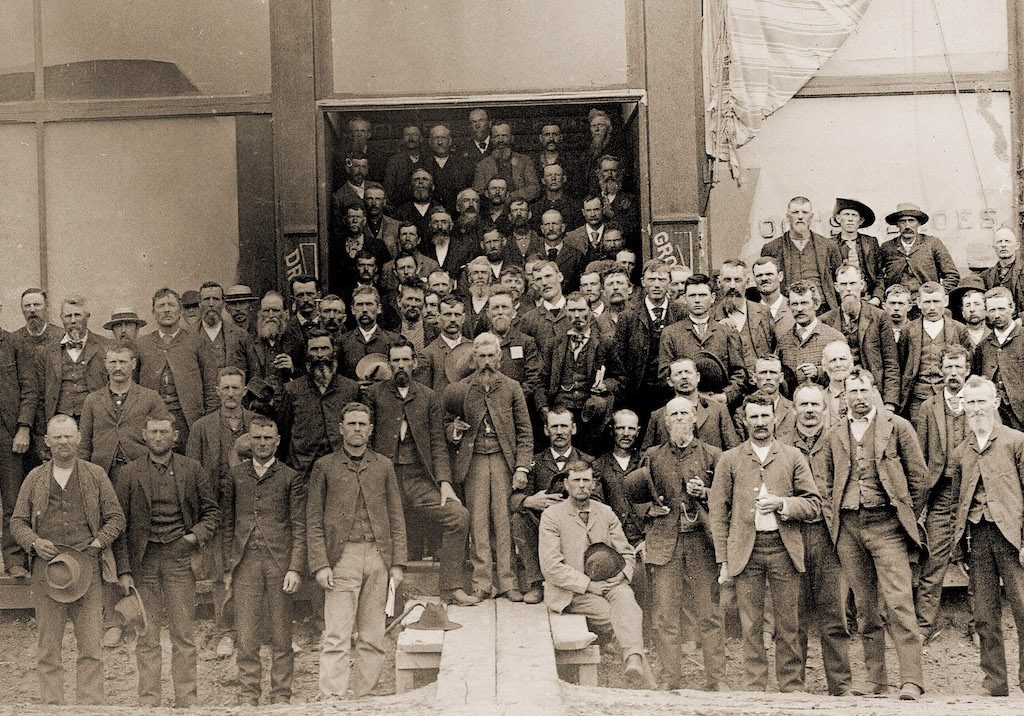
Populist Party candidate nominating convention held at Columbus, Nebraska, July 15, 1890. (Wikimedia Commons)
How did populism get such a bad name? It’s a single word that, for many, succinctly conveys everything that is racist, anti-intellectual, conspiratorial, and provincial about mass working-class politics. It’s a label applied to right-wing demagogues like Donald Trump, Jair Bolsonaro, and Marine Le Pen, who are then conflated with left leaders like Bernie Sanders, making all of them appear as different instantiations of the same dangerous force.
In short, says Thomas Frank, it was populism’s elite enemies who defined the late-nineteenth-century movement of farmers and workers as maniac menaces to the social order. Mid-twentieth-century historian Richard Hofstadter then rendered this partisan attack into a commonplace consensus account that has stigmatized an undifferentiated mass of challengers to the establishment. This all laid the groundwork for today’s dynamic with a Democratic Party that sanctifies expert rule and a Republican Party that has successfully appropriated popular revolt and recast it as a conflict over social class with questions of economic power mostly aestheticized.
Thomas Frank’s latest book, The People, No: A Brief History of Anti-Populism, is a history of this political dynamic.