Students at Brown Just Finished a Hunger Strike Against Israel
Earlier this month, 19 Brown University students completed an eight-day hunger strike demanding the school divest from companies profiting from human rights abuses in Palestine. We talked to three of the hunger strikers about the protest.
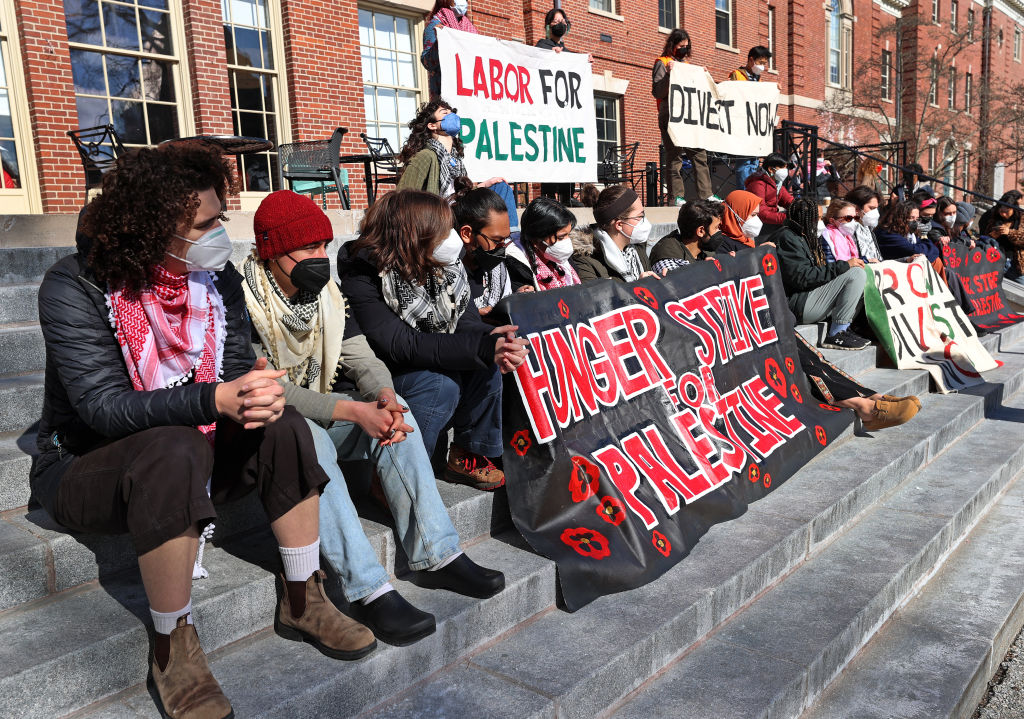
Brown University students take part in a hunger strike for Palestine, February 7, 2024. (David L. Ryan / the Boston Globe via Getty Images)
Earlier this month, nineteen Brown University students wrapped up an eight-day hunger strike to demand that university trustees hear their proposal to divest the endowment from companies that profit from human rights abuses in Palestine, as identified in a 2020 report by the university’s Advisory Committee on Corporate Responsibility in Investment Practices (ACCRIP).
Hundreds of students have organized peaceful protests and actions at Brown since October 7, including two occupations of University Hall, leading to the arrest of over sixty students. Hundreds also participated in solidarity actions throughout the week, including a 250-plus solidarity fast on the final day of the strike. The Brown Corporation, the university’s governing body, met on February 8 and 9 but refused to discuss the proposal.
Jacobin spoke with three of the hunger strikers to discuss their experience during the strike, and talk about what is next for the growing movement at Brown: Kaliko Kalāhiki, a senior studying critical Native American and indigenous studies; Ariela Rosenzweig, a senior studying religion and a member of Students for Justice in Palestine who was arrested along with nineteen other members of Jews for Ceasefire Now on November 8 during a sit-in at University Hall; and Niyanta Nepal, a junior studying biomedical engineering and education studies who leads the activist coalition on campus.