The West Coast Was Once a Cradle of Class Struggle
In the depths of the Great Depression, maritime and waterfront workers on the Pacific Coast of the US — from Bellingham, Washington, to San Diego, California — erupted in militant strikes against their shipping magnate employers.
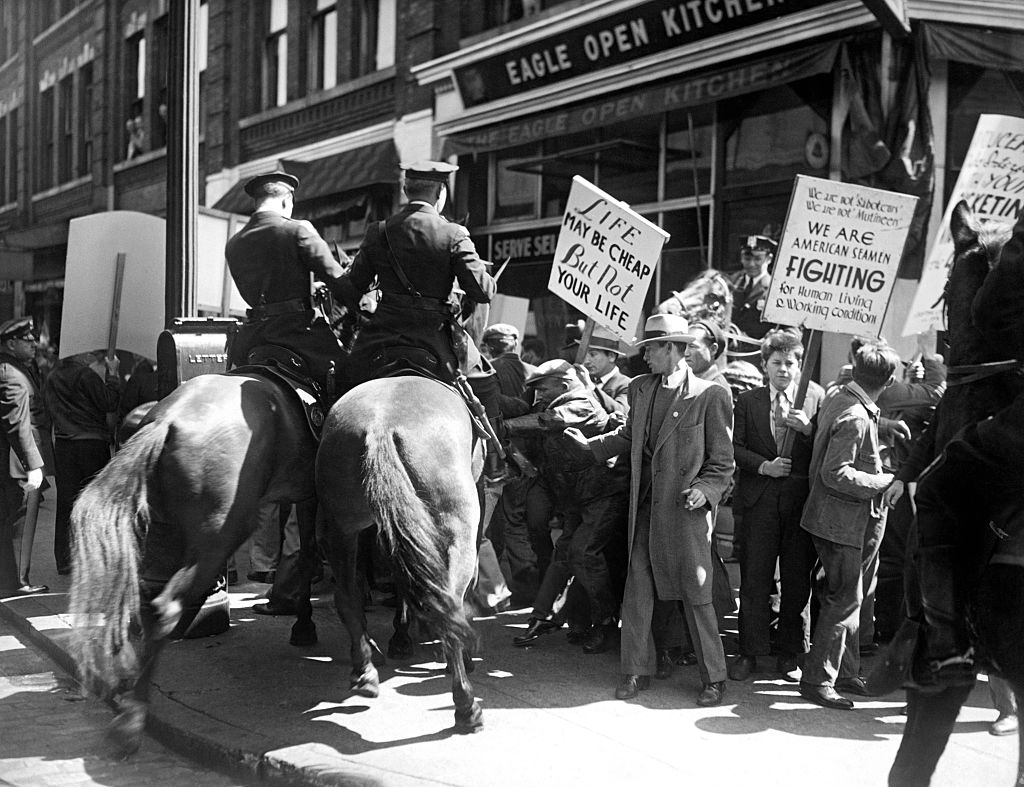
Mounted police charge striking workers on the waterfront, 1936. (Underwood Archives / Getty Images)
Robert Cherny is professor emeritus of history at San Francisco State University and the author most recently of Harry Bridges: Labor Radical, Labor Legend. Our interview mainly focused on the story of the West Coast waterfront strike in 1934, and International Longshore and Warehouse Union (ILWU) leader Harry Bridges, one of the most remarkable labor leaders of the CIO moment.
Benjamin Y. Fong
Could you tell the story of the West Coast waterfront strike?
Robert Cherny
1934 saw a major strike all up and down the Pacific Coast, first by longshore unions and then by maritime unions. It began with an effort to revive the International Longshoremen’s Association (ILA), an American Federation of Labor [AFL] union along the Pacific Coast. There had once been ILA locals in most of the Pacific Coast ports, but in the 1920s, nearly all of them were destroyed through local anti-union organizations.