By Emphasizing Unity Over Division, the CIO Birthed a New Labor Movement
Workers in the US were deeply split in the 1930s, not least by race and ethnicity. To organize greater swaths of the working class, the Congress of Industrial Organizations had to turn division into solidarity.
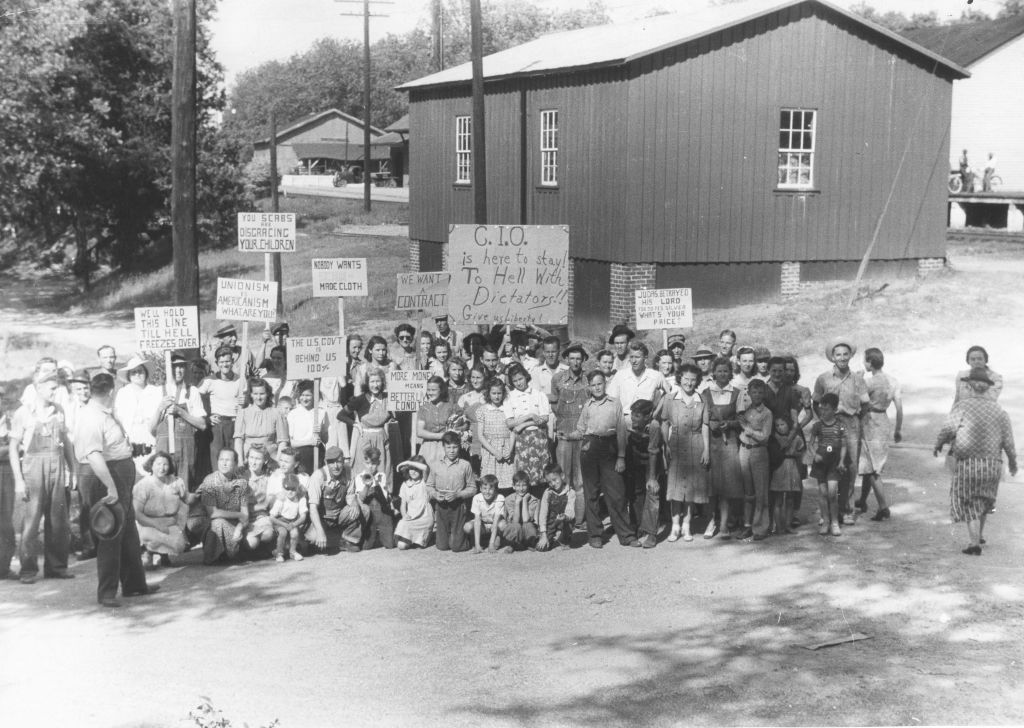
Members of the Congress of Industrial Organizations (CIO) gather with signs to picket outside a mill in Greensboro, Georgia, May 1941. (PhotoQuest / Getty Images)
Lizabeth Cohen is Howard Mumford Jones Professor of American Studies and Distinguished Service Professor in the Department of History at Harvard University. She is the author of many books, but most notable for this project is her book Making a New Deal: Industrial Workers in Chicago, 1919–1939, winner of the Bancroft Prize and a finalist for the Pulitzer. Making a New Deal is perhaps best known for introducing the idea that the Congress of Industrial Organizations (CIO) bred a “culture of unity” that was key to its success. As Cohen wrote there:
The CIO’s effort to create a culture of unity that brought workers of different sexes, races, nationalities, and locales together was so basic to its organizing philosophy that it permeated all CIO union activities in Chicago on and off the shop floor. Solidarity, of course, was the age-old cry of labor movements, but it had a very particular significance to the industrial unionists trying to organize America’s factories in the 1930s. If any theme prevailed in this historic drive to bring unions to manufacturing workers throughout the vast United States, it was the recognition that workers themselves must change to prevent the kinds of divisions that had doomed similar efforts to organize them in the past.
Our interview covered a lot of ground, including the prehistory of the CIO, the key reasons for its success, and what lessons can be drawn from the CIO moment for the present.