For a Model of Working-Class Mass Organizing, Look to the CIO
The level of anti-capitalist sentiment in the US today hasn’t been seen since the 1930s. Labor radicals seized that moment to create the pivotal Congress of Industrial Organizations. We should take lessons from their achievements — and their missteps.
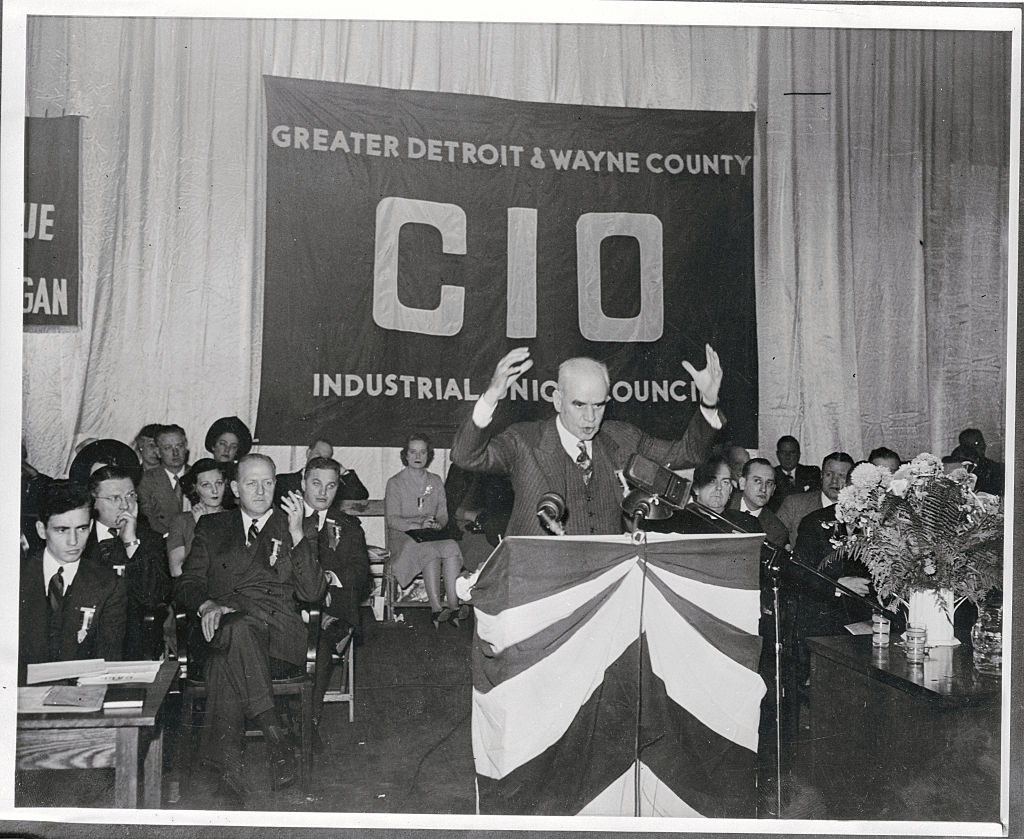
Philip Murray, president of the Congress of Industrial Organizations (CIO), is shown addressing the opening of the CIO Fourth National Convention in Detroit on November 17, 1941. (Bettmann / Getty Images)
Steve Fraser is a historian and author of many books, most notably for this project, Labor Will Rule: Sidney Hillman and the Rise of American Labor, a fantastic biography of one of the most important figures in the Congress of Industrial Organizations (CIO).
In this interview, Fraser helpfully articulates both sides to many debates among historians about the meaning of the CIO moment: success was made possible by both the Roosevelt administration and working-class upsurge from below; the CIO was both radical and a container of revolutionary impulses; workers were both angry about the basic conditions of their work and alienated from the society that produced those conditions. His perspective on these debates helps us to appreciate the significance and accomplishments of the CIO without romanticizing it.
Benjamin Y. Fong
What was the CIO, and what is its primary historical significance?
Steve Fraser