The Sit-Down Strike Was Born When Akron Rubber Workers Opted to Stay Put, Not Walk Out
In the 1930s, unions grabbed headlines and won major battles with sit-down strikes, where striking workers occupied their workplaces. The fiery tactic put the Congress of Industrial Organizations on the map and struck fear in the hearts of business elites.
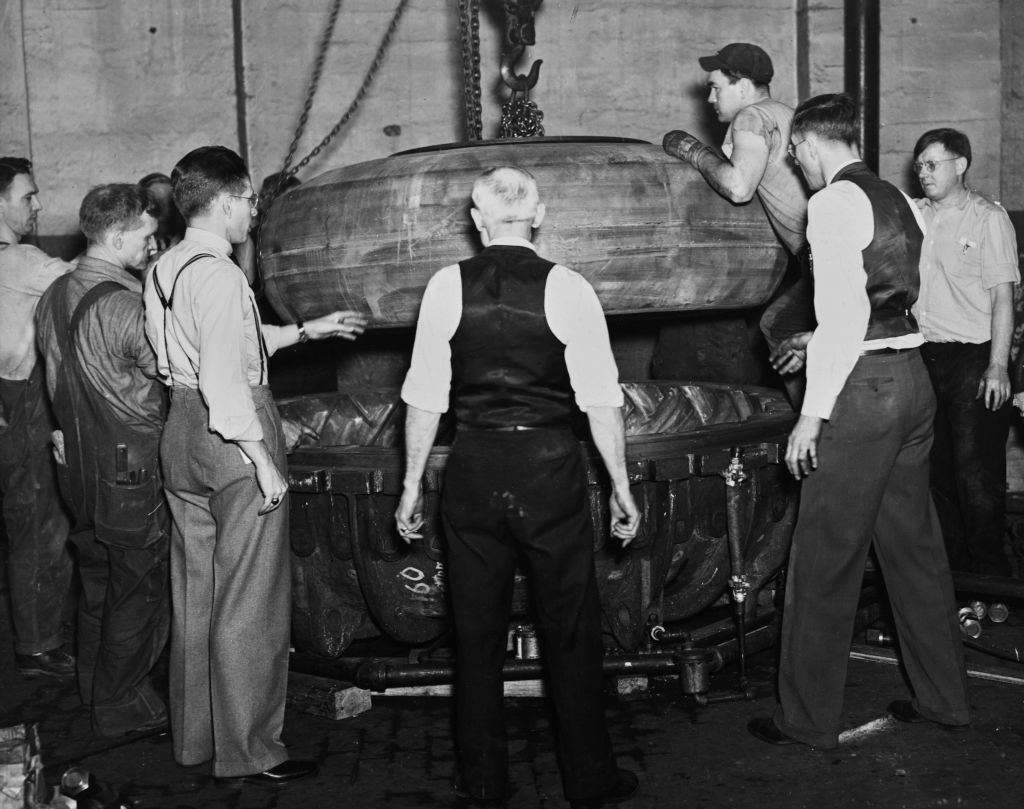
Rubber workers prepare a heavy-duty tire for curing at the Goodyear production facility in Akron, Ohio, c. 1935. (Keystone View Company / FPG / Archive Photos via Getty Images)
Daniel Nelson is professor emeritus of history at the University of Akron and author of American Rubber Workers and Organized Labor, 1900–1941. Professor Nelson and I discussed the origins and significance of the Akron rubber strike of 1936 — often dubbed “the first CIO strike,” as it happened less than two months after the founding of the CIO and was its first big victory. We also talked about the relationship between the top-down and bottom-up elements of the CIO moment, and how that manifested in the Akron case.
Rose Pesotta, an organizer with the International Ladies Garment Workers Union, was dispatched to Akron to help with the strike. She later recounted:
In contrast to short-lived sit-downs of Akron rubber workers in the past, limited to a single department, the tire-builders’ sit-down on February 14 was a spark that fired the long dormant indignation of Goodyear employees generally. Here was mass revolt, which might at any moment spread through the Goodrich, Firestone, Mohawk, and General Rubber Company plants and shut them down also. . . . It was apparent that we were standing on the brink of a smoking volcano, which at any time might erupt.