Tyler Perry’s Wealth Is Not Trickling Down to Black Residents of Atlanta
Filmmaker and entrepreneur Tyler Perry is a billionaire. His Atlanta studios receive massive tax write-offs, premised on the idea that his success will inspire others. If that sounds familiar, it’s because it’s a liberal version of trickle-down economics.
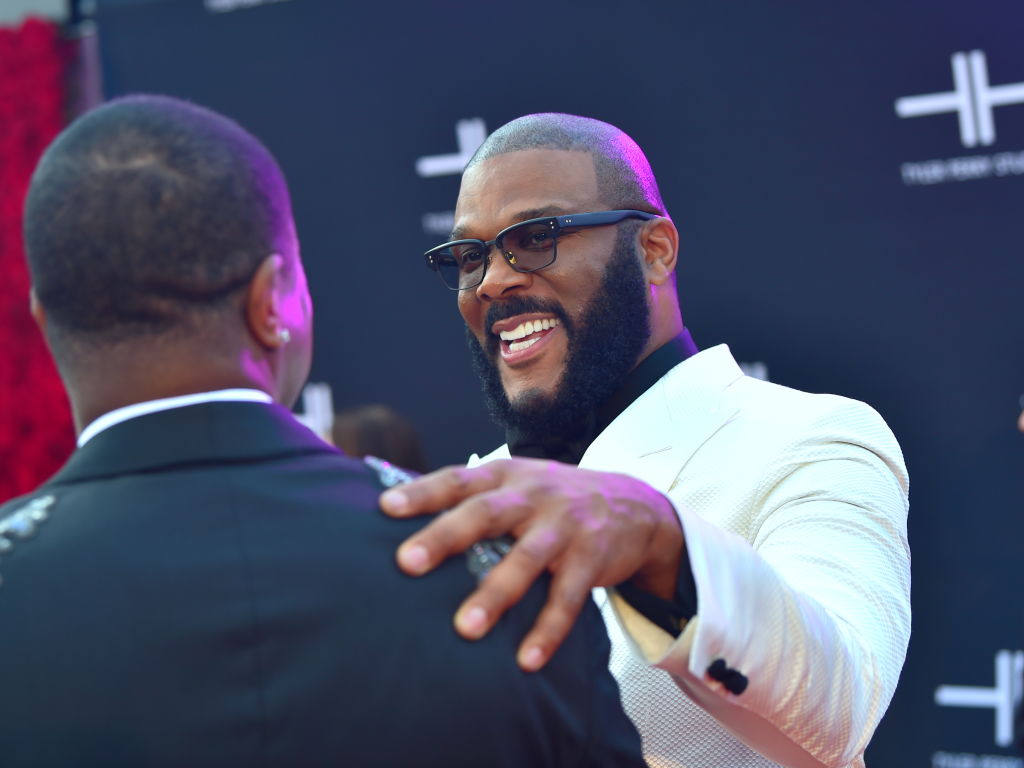
Tyler Perry and Chris Tucker at the grand opening gala for Tyler Perry Studios on October 5, 2019, in Atlanta, Georgia. (Prince Williams / Wireimage)
The new Amazon Prime film Maxine’s Baby documents the rise of Tyler Perry, who was born into poverty and hardship in New Orleans and overcame racism and long odds to become one of the highest-paid entertainers in the world — a billionaire, no less. While the film tries to affect the tone of a serious examination, it’s ultimately a glossy two-hour commercial for the filmmaker and entrepreneur, a chance for Oprah Winfrey and Whoopi Goldberg to hype him as “among the pantheon of today’s greatest cinematic innovators.”
“Is Tyler Perry running for office?” asked RogerEbert.com. Maybe not, but it’s a fair question. The ethos that structures the film’s feel-good arc has been the beating heart of the Democratic Party’s vision of social justice since the Obama years.
By now most liberals wince at the mention of Reagan-branded “trickle-down economics.” Joe Biden, Hillary Clinton, and Barack Obama all use the term in a derogatory manner. The irony is that these liberals, in addition to a weak commitment to hiking taxes on the rich, have their own version of the theory. Their thinking goes that when members of marginalized groups make it to the top of the economic and cultural ladder, their ascent is an automatic gain for remaining members of that group.