J. Edgar Hoover’s American Century
As director of the FBI for several decades, J. Edgar Hoover helped build a massive, professionalized national security state and hounded leftists out of public life. In doing so, he profoundly shaped the course of US history.
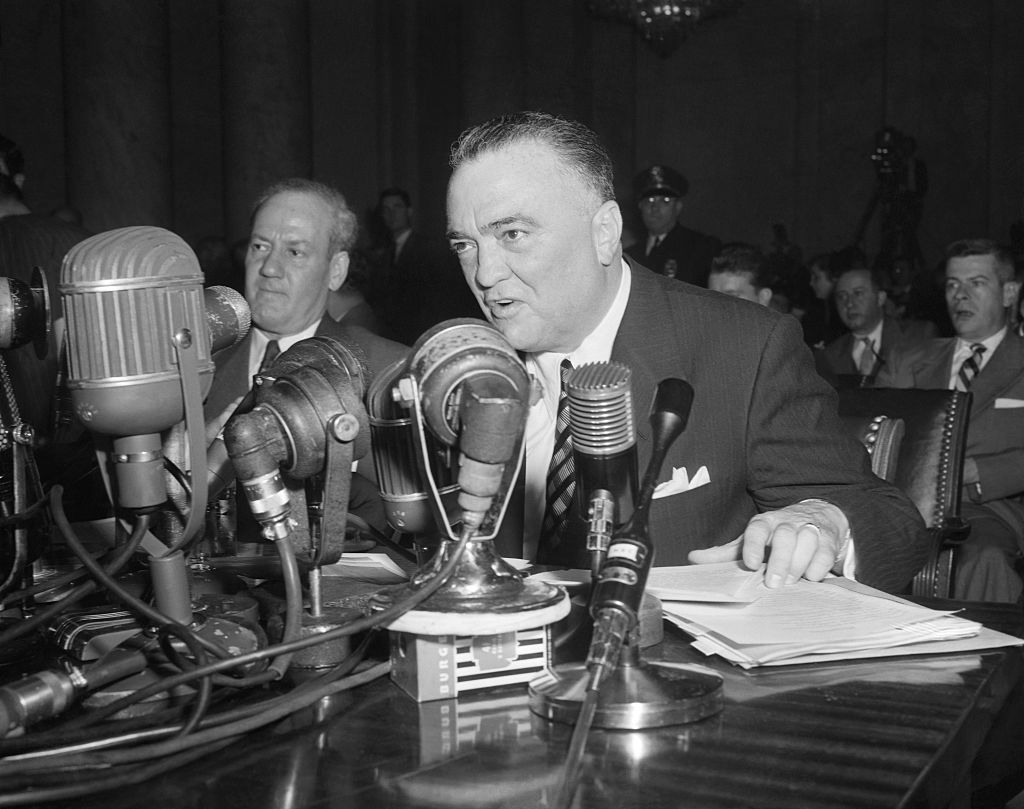
FBI director J. Edgar Hoover testifies before the Senate in 1953. (Bettmann / Getty Images)
J. Edgar Hoover, the longtime head of the Federal Bureau of Investigation, may have had a greater impact on the course of American history than any other unelected public official. From his early-career role in the Palmer Raids, to helping stoke the Second Red Scare, to his attempts to disrupt and destroy the civil rights movement and the New Left in the ’60s and ’70s, Hoover played a key role in undermining left-wing and progressive politics in the United States. But Hoover served in the FBI for nearly fifty years, and his legacy extends far beyond his attacks on the Left.
In this interview for Jacobin Radio podcast The Dig, guest host and Jacobin editor Micah Uetricht talked with historian Beverly Gage about her biography of Hoover, G-Man: J. Edgar Hoover and the Making of the American Century. They discuss Hoover’s early personal and political influences, his strengths as a bureaucrat, his career-long vendetta against left-wing radicalism, and more. This transcript has been edited for length and clarity.
The Consummate Bureaucrat
Micah Uetricht
J. Edgar Hoover was the director of the Federal Bureau of Investigation (FBI) for nearly fifty years. Having read your biography of him, it seems safe to say that he was perhaps the most influential unelected bureaucrat in all of American history, or certainly near the top.
Beverly Gage