UAW Strikers Have Scored a Historic, Transformative Victory
With its successful strike, the UAW has broken with decades of concessions, won on pay and workplace democracy, and launched a new national labor leader. There’s much more organizing to be done, but this is an unmitigated victory for the entire working class.
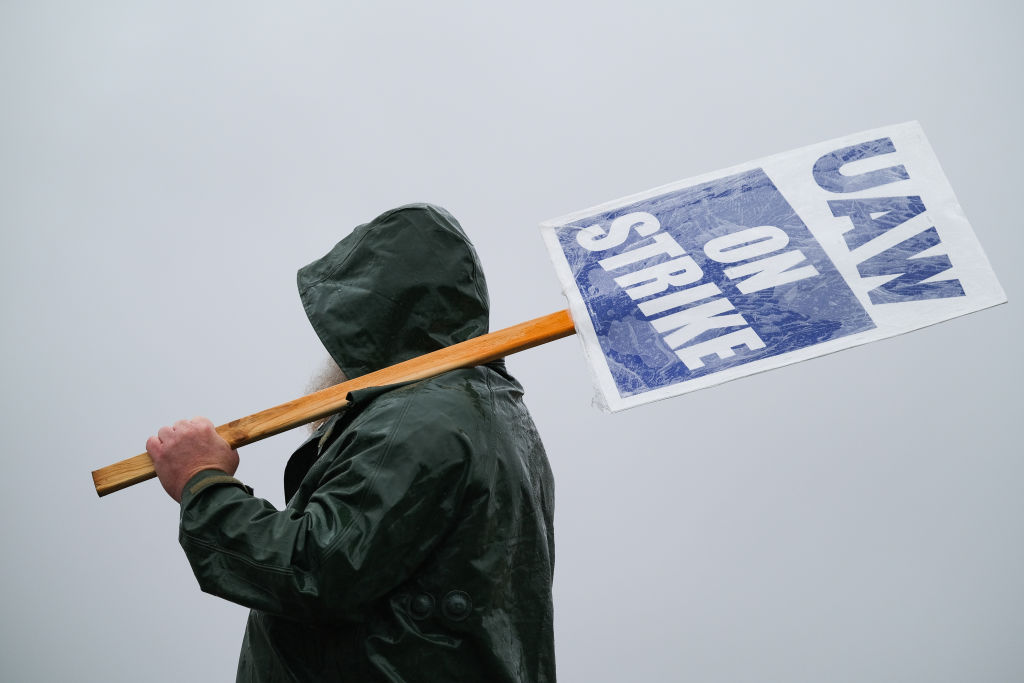
A UAW worker pickets outside the General Motors plant in Spring Hill, Tennessee, October 30, 2023. (Kevin Wurm / Bloomberg via Getty Images)
The UAW’s victory in its forty-five-day strike against the Big Three Detroit automakers is historic and transformative, ending a forty-three-year era of concession bargaining and labor movement defeat that began with Chrysler’s near bankruptcy in 1979 and Ronald Reagan’s destruction of the Professional Air Traffic Controllers Organization two years later.
Not only did the union win substantial wage increases for all members in its tentative agreements (TAs) — at least 25 percent over the four-and-a-half-year contract — but the wage structure is radically progressive, eliminating the second- and third-class status endured by thousands of temps and second-tier workers. With the regularization of their employment status, these workers will enjoy extraordinary pay increases, in some cases upward of 150 percent.
And the union clawed back the annual cost-of-living adjustment (COLA) that had been eliminated during the 2008 financial crisis. COLA had been a standard feature of UAW contracts since 1948, when General Motors first proposed it to the union to blunt the effort, forcefully pushed by then UAW president Walter Reuther, to limit auto and steel industry price hikes either through collective bargaining or government regulation. The labor movement at the time was fighting to limit inflation but secure a healthy wage increase — benefitting working class and middle class alike, union and nonunion, by advancing a program that shifted income and wealth from capital to labor.