Kissinger in Argentina
- René Rojas
“If there are things that have to be done, you should do them quickly,” Henry Kissinger advised the Argentine regime. In the first three years of the dictatorship, thousands of labor, student, and community activists were killed or disappeared.
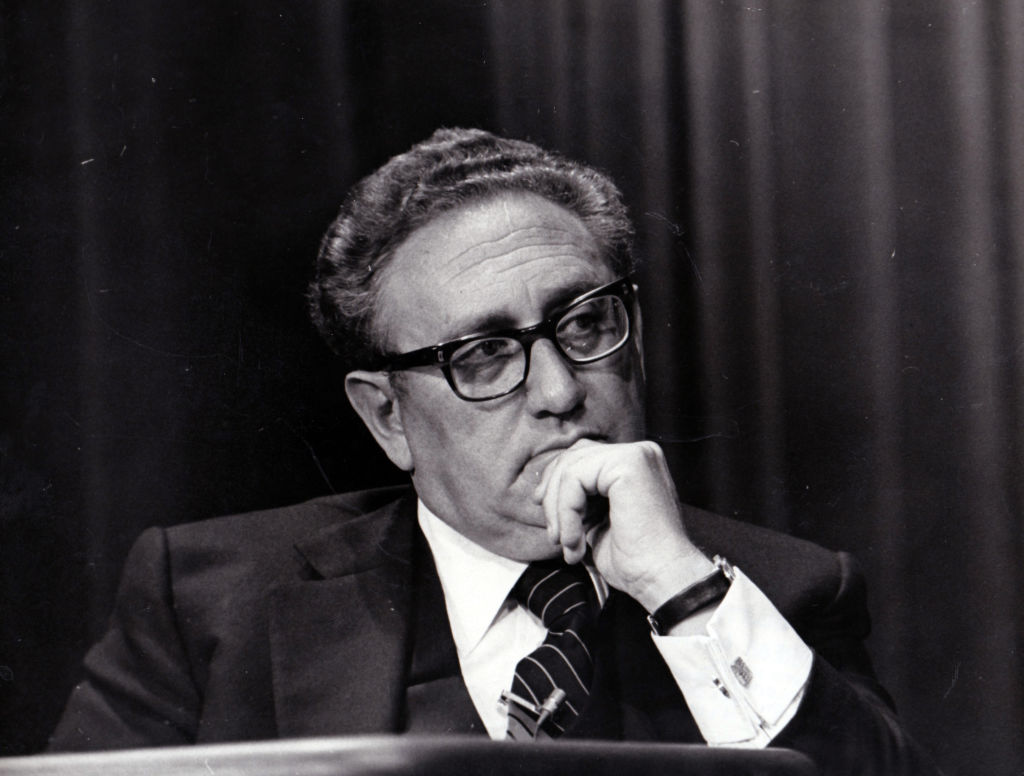
Henry Kissinger ca. 1976 in New York City. (PL Gould Images / Getty Images)
Just after his 1969 inauguration, Richard Nixon sought to reset relations with Latin America and decided to send New York governor Nelson A. Rockefeller on a state trip to the region. The tour, which entailed visiting twenty Latin American countries, was plagued by protests and violent incidents, reminiscent of the difficult trip that Nixon himself had taken in 1958 as Dwight Eisenhower’s vice president.
Upon returning, Rockefeller submitted a report recommending the US government ease restrictions on foreign assistance to the region and grant Latin American countries special trade preferences, giving their exports access to the US market. Yet despite Nixon’s promises to address Latin American governments’ demands and the Rockefeller report’s recommendations, economic assistance to the region subsequently decreased significantly.
In 1971, for example, only $463 million was distributed — 50 percent less than the average given a decade before. In the midst of a deep economic crisis — which caused the dollar to devalue — Latin America wasn’t a priority for Nixon and his national security advisor, Kissinger, in spite of public statements to the contrary. In the meantime, Perón’s return to power in Argentina — after seven years of dictatorship and eighteen years of his party’s electoral proscription — eroded relations with Washington. Peronism dominated as a nationalist movement, rooted in a populist alliance with powerful unions.