Kissinger and the South American Revolutions
- René Rojas
In the mid-1970s, fanatical dictatorships viewed South America as the forefront of a third world war in the fight against communism. Henry Kissinger endorsed this crusading spirit — and unlike in Vietnam, he accomplished his objectives there.
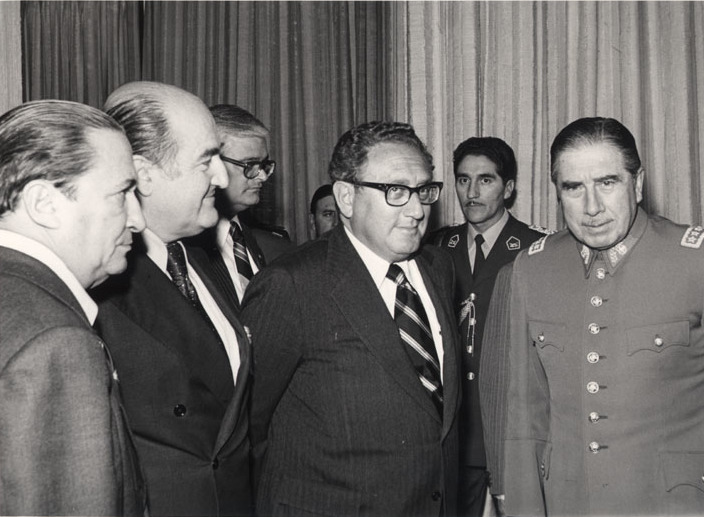
Henry Kissinger with Chilean dictator Augusto Pinochet. (Wikimedia Commons)
Although the arrival of Henry Kissinger signaled a rupture in American foreign policy along with domestic political shifts, the change was not as keenly perceived in Latin America. Nevertheless, Kissinger would ultimately close a political cycle that began in the early 1960s in South America.
Salvador Allende was the antithetical embodiment of Henry Kissinger’s Latin America policy. Three years before Kissinger assumed a leading role in foreign policy, Allende had warned of the problems a left government in the region might face. In 1966, the future president of Chile gave an almost prophetic warning, laying out how the Latin American left viewed US foreign policy:
The Johnson Doctrine constitutes for the Chilean people, as for all the countries of Latin America, an explicit declaration that imperialists will respond with violence to any popular movement that has any chance of coming into power. This has made the Chilean popular movement — which has achieved notable gains expanding and deepening democracy in our country — clearly realize that the United States will use force to prevent it from accessing power by democratic and legal means.
It also means that, consequently, we have an obligation to intensify our struggle; mobilize the masses, link anti- imperialist actions to the everyday demands of the population: strikes, land occupations, collective mobilizations, and the awareness that we will meet with opposition from reactionary violence and we will oppose it with revolutionary violence. It will be the people of Chile and our country’s conditions that will determine what method we use to defeat the imperialist enemy and its allies.