With Their Five-Month Strike, Hollywood Writers Scored a Historic Victory
With their 146-day strike this year, Hollywood film and TV writers made major gains in defending their livelihood against exploitative streaming models and the threat of AI. In an interview, two writers involved in the strike discuss the historic walkout.
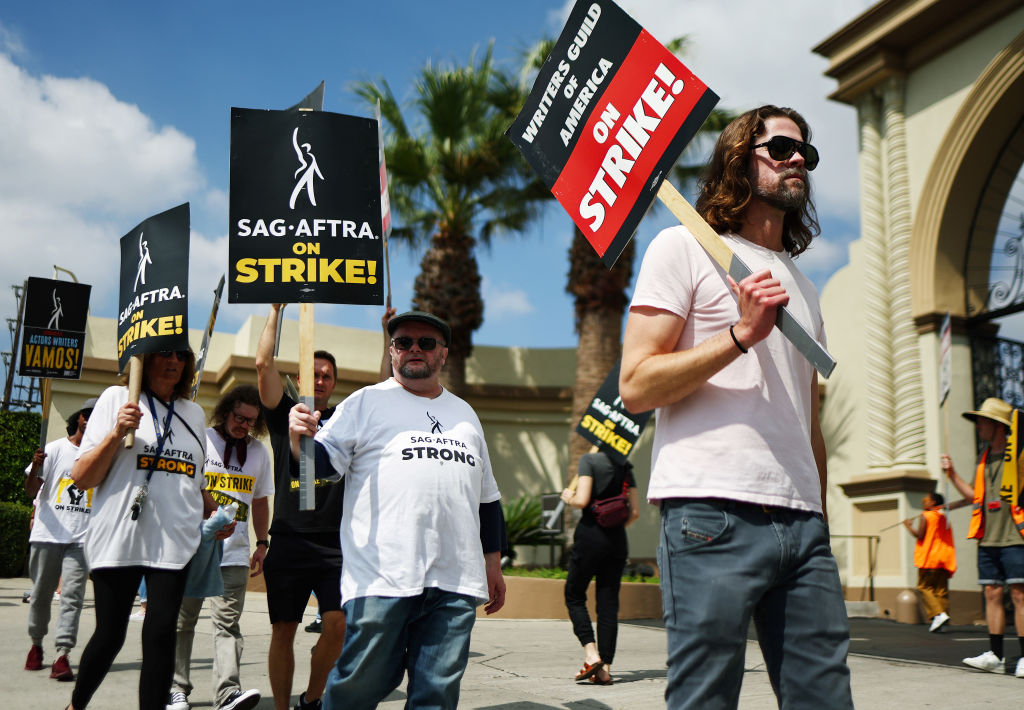
Striking Writers Guild of America members picket with striking SAG-AFTRA members outside Paramount Studios on September 18, 2023 in Los Angeles, California. (Mario Tama / Getty Images)
On May 2 of this year, 11,500 Hollywood film and TV writers represented by the Writers Guild of America (WGA) went on strike. Writers returned to work five months later on September 27, when the union announced a tentative agreement with the Alliance of Motion Picture and Television Producers (AMPTP); WGA members officially ratified the deal on October 9, with 99 percent voting in favor. In addition to pay increases, the contract includes minimum staffing requirements for writers’ rooms and restrictions on studio uses of artificial intelligence (AI).
For the Jacobin Radio podcast, labor scholar Barry Eidlin interviewed two WGA writers about the historic strike and the contract wins: Howard A. Rodman, a former president of the Writers Guild of America West, and Alex O’Keefe, an organizer and screenwriter for FX’s The Bear. This interview has been edited for length and clarity.
Barry Eidlin
How do you feel after five months on the picket line?