The UAW’s Strike Wins Could Mark a Shift Toward a New Kind of Unionism
The UAW just reached a tentative contract deal with automaker Stellantis, which agreed to reopen a shuttered plant. By reasserting control over company investment decisions, the union is carving out a more expansive role for workers in shaping the economy.
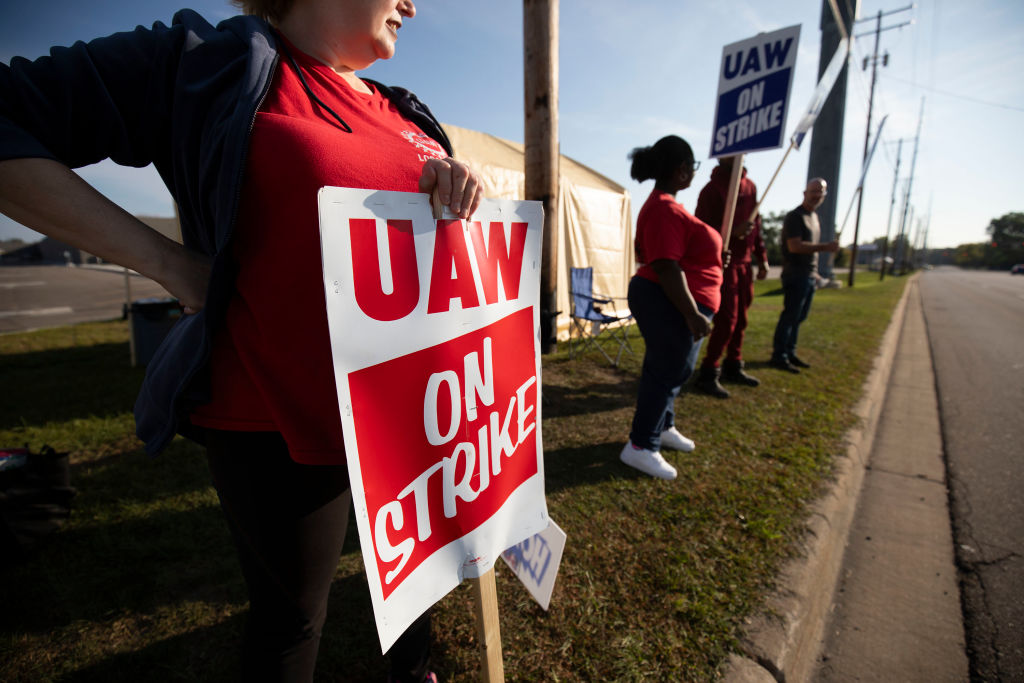
United Auto Workers members strike outside the General Motors Lansing Redistribution facility on September 23, 2023 in Lansing, Michigan. (Bill Pugliano / Getty Images)
On Saturday, October 28, the United Auto Workers (UAW) announced a tentative deal with automaker Stellantis, after forty-four days of a targeted strike against all Big Three auto companies the union dubbed the “stand-up” strike. The deal came three days after announcing a tentative agreement with Ford and two days before General Motors (GM) settled on October 30.
In announcing the Stellantis agreement, UAW president Shawn Fain and vice president Rich Boyer described it as “historic,” although they emphasized that members had the final say in deciding whether or not the agreement was good enough. Complete details are not yet available, but the information available suggests that, just as with Ford, UAW members were able to make significant gains at Stellantis.
One announced provision in particular stands out. As part of the deal, Stellantis has agreed to reopen its Belvidere Assembly Plant in Illinois, which it shuttered earlier this year. On top of that, the company has agreed to invest in a new electric vehicle (EV) battery plant in Belvidere. This is a major victory that will change the lives of thousands of autoworkers and their families whose lives were upended by the plant closure, along with the community of Belvidere that was left devastated.