The Largest Health Care Strike in US History Is Set to Begin Tomorrow
Tomorrow, 75,000 health care workers are set to strike at hundreds of Kaiser facilities across several states in the largest such strike in US history. Their primary grievance is low staffing levels, which unions say are hurting patients and workers alike.
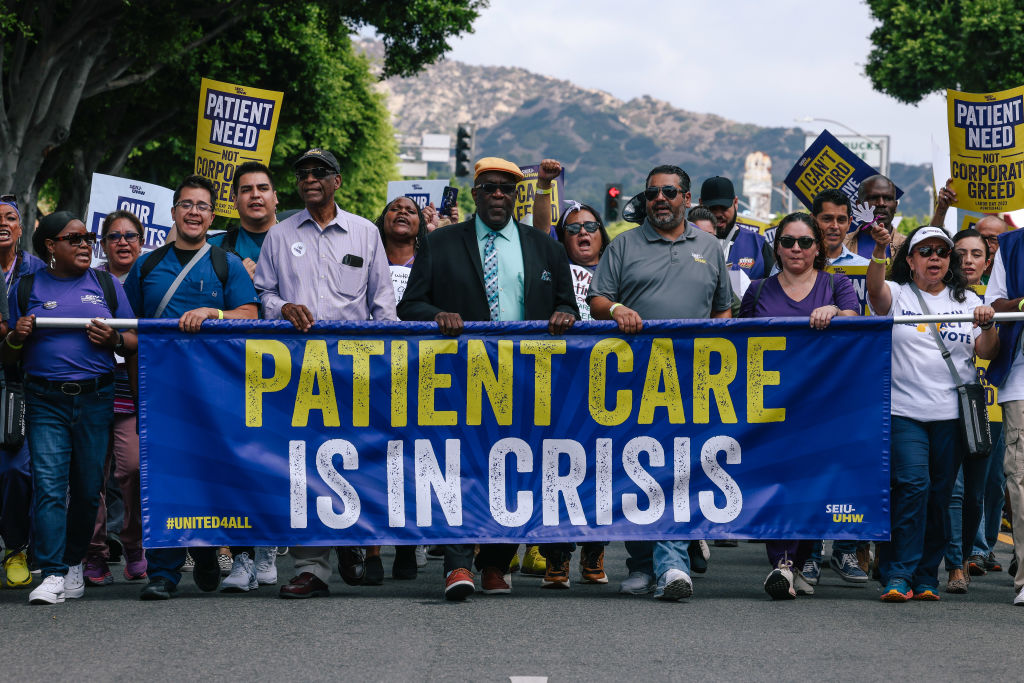
Thousands of health care workers march in Los Angeles to call for the urgent need for improved working conditions on Monday, September 4, 2023. (Dania Maxwell / Los Angeles Times via Getty Images)
Seventy-five thousand health care workers at Kaiser Permanente, the largest nonprofit health care provider in the United States, are set to go on strike on Wednesday, October 4, after contract negotiations failed last week. The coalition of Kaiser Permanente Unions have accused Kaiser of negotiating in bad faith and committing unfair labor practices (ULPs). The strike, authorized early in September, will take place for three days at hundreds of Kaiser facilities across California, Colorado, Oregon, Washington, Virginia, and Washington, DC.
This is but one development amid the bustle of what promises to be the biggest year for labor activity in four decades, but its historic importance should still be appreciated. Not only will the Kaiser strike be the largest health care strike in American history, but should this limited ULP strike fail to convince Kaiser to negotiate in good faith, the ensuing open-ended strike would likely be a protracted battle over the future of health care provision in the United States.
The unions’ primary complaint in negotiations has been low staffing levels, which workers believe are hurting patients and employees alike. “We’ve repeatedly raised our concerns with Kaiser executives about the Kaiser short-staffing crisis, but they are bargaining in bad faith and refusing to listen to us,” said Audrey Cardenas Loera, a fees and benefits support specialist at Kaiser Permanente in Hillsboro, Oregon. In a recent survey of thirty-three thousand Kaiser employees, two-thirds of workers said they’d seen care delayed or denied due to short staffing.