The UAW Strike Could Spark a Broader Revival of Working-Class Militancy
With its ongoing strike against the Big Three, the UAW is attempting to recapture the fighting spirit of its heroic early days. The union’s militant approach marks a sharp break with the recent past — and could spark more insurgency across the labor movement.
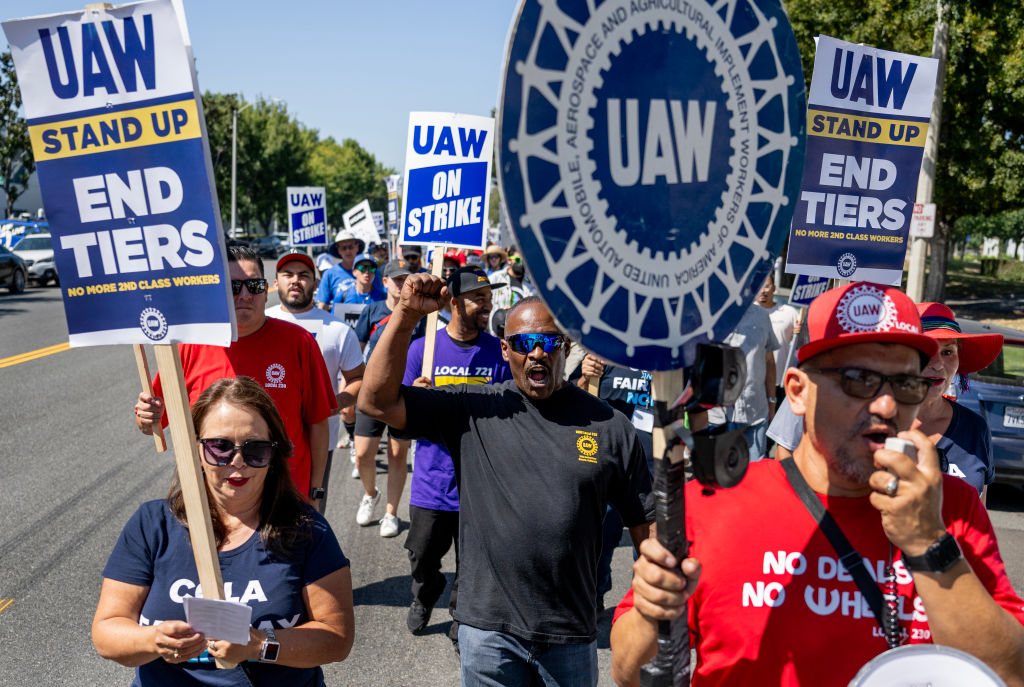
Striking UAW members march in front of the Stellantis Mopar facility on September 26, 2023 in Ontario, California. (Gina Ferazzi / Los Angeles Times via Getty Images)
The United Auto Workers (UAW) have now been on strike against the Big Three automakers — Ford, General Motors (GM), and Stellantis — for nearly two weeks. Under the leadership of newly elected president Shawn Fain, the UAW is for the first time in its history striking all three of the companies at once. The union is deploying a novel approach that it is calling the “stand-up strike”: gradually escalating the walkout by calling out only a few plants at a time to slowly ratchet up pressure on the automakers.
The “stand-up strike” moniker is a reference to the legendary sit-down strikes of 1936–37 that allowed the UAW to unionize the American auto industry. The current strike is also making history: it has galvanized mass public support and pressured President Joe Biden himself to join striking workers on the picket line, the first time a sitting US president has done so. For the Jacobin Radio podcast, Suzi Weissman interviewed the great American political economist and labor historian Nelson Lichtenstein about the strategy behind the strike, its historical resonances, and what it might mean for the broader labor movement. This transcript has been edited for length and clarity.
Suzi Weissman
Give us an overview of the UAW strike.
Nelson Lichtenstein