In Failing to Strike at UPS, the Teamsters Missed a Big Opportunity
Members of the Teamsters just voted to ratify a new contract at UPS. The union made big gains — but in opting not to strike over demands beyond wages, the Teamsters may have passed up a transformative opportunity for the labor movement.
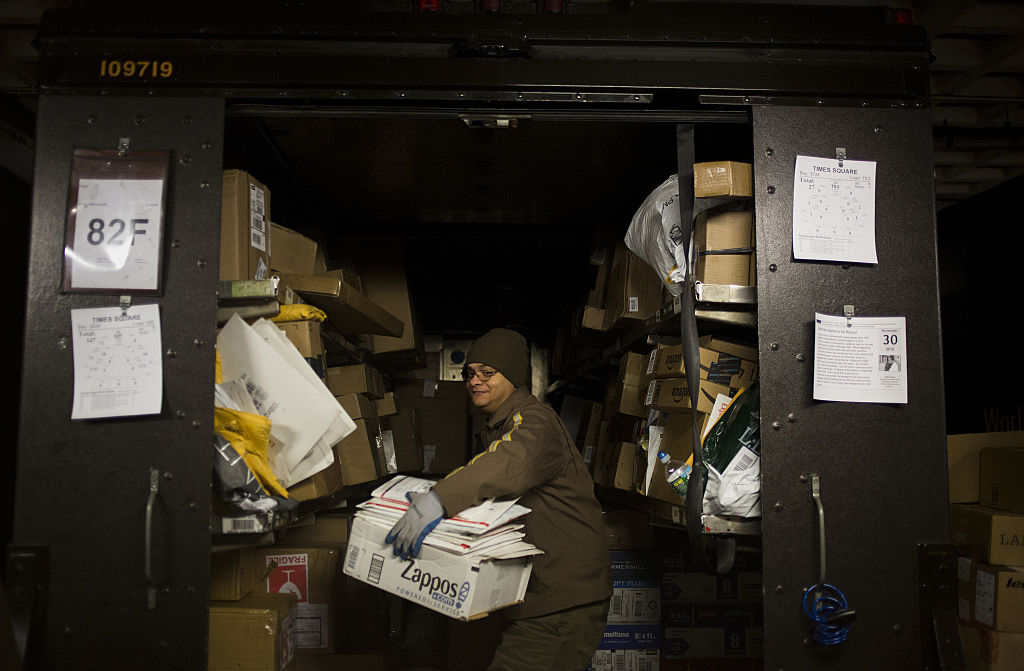
An employee loads packages onto a truck for delivery on Cyber Monday at a UPS distribution facility in New York on November 30, 2015. (John Taggart / Bloomberg via Getty Images)
There is a debilitating tendency on the Left to instantly judge bargaining settlements as either sellouts or breakthroughs. But neither the cynicism nor the cheerleading gets us very far in grasping the actual significance of these agreements.
Sober assessments pivot on the relative weights given to context, material gains, building the union, and contributing to broader working-class consciousness and organization. But even here there are differences that extend beyond “the facts.” More often than not, disagreements reflect underlying divergences in political perspectives and goals. Making these transparent is crucial to moving forward.
Measured in conventional union terms, the Teamsters-UPS contract seems a clear Teamster victory. Backed by the threat to strike, the union pretty much achieved the goals it set out at the start of bargaining: no new concessions, some limits on overtime work, throwing out a two-tier structure accepted in the last agreement, and impressive wage increases of $7.50 an hour over five years across the board, with $2.75 of that coming in the first year.