Hollywood Writers and Actors Are Striking to Make Globalization Work for Them
Globalization has upended film and TV, creating more jobs, but ones that are worse-paid and more precarious. Like UPS Teamsters did with their strike threat, striking Hollywood workers are seeking to make their industry's global reach work for them.
SAG-AFTRA president Fran Drescher with national executive director and chief negotiator, Duncan Crabtree-Ireland, join Writers Guild members at a picket line outside Netflix in Los Angeles on July 14, 2023. (Valerie Macon / AFP via Getty Images)
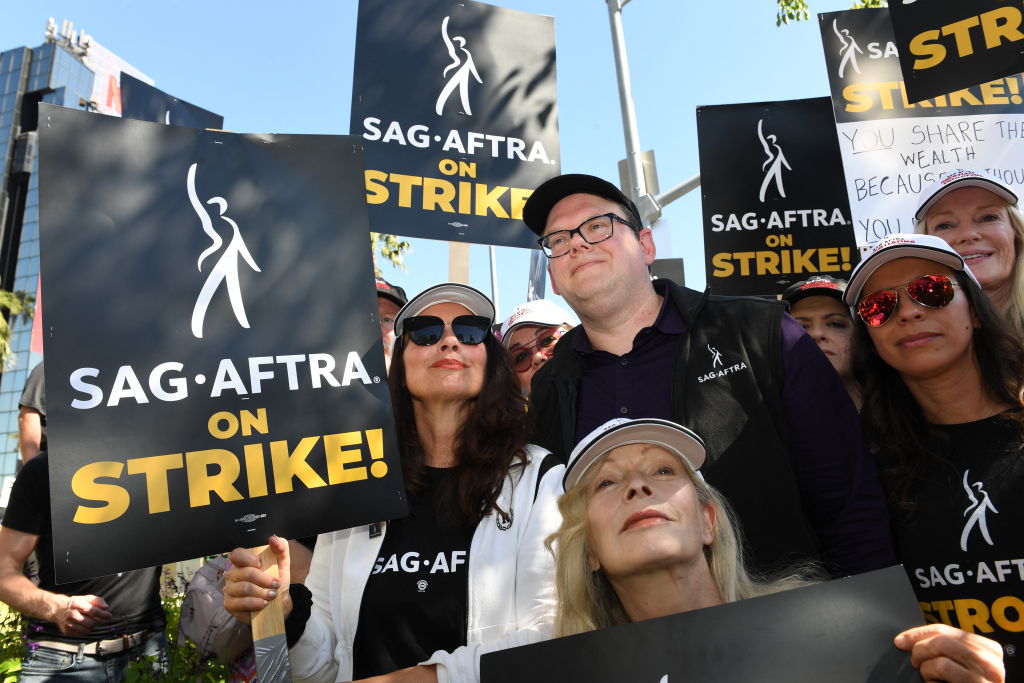
This summer organized labor is on the offensive, with more unity and determination than we have seen in two generations. In Los Angeles, New York, and elsewhere, more than 10,000 writers and 160,000 actors are on strike, seeking to make Hollywood’s global reach finally work for them. It’s the first strike against film and TV companies in forty-three years.
Their concerns are remarkably similar to those of the 340,000 Teamsters who work at United Parcel Service (UPS), where the union achieved an historic wage and working conditions victory just days before an August 1 strike deadline.
The Hollywood studios and big logistics companies like UPS and Amazon are global entities whose revenues steadily rose even before the pandemic sent them soaring. All over the world home-bound customers splurged on both packaged goods and televised entertainment, the latter increasingly delivered by Netflix, HBO, Amazon, or one of the other streaming companies. During the last three decades, employment just about doubled in the film industry and in the transportation and warehousing sector.